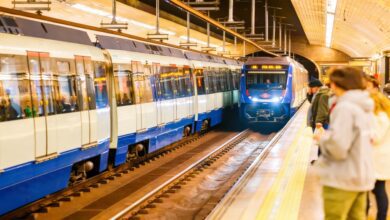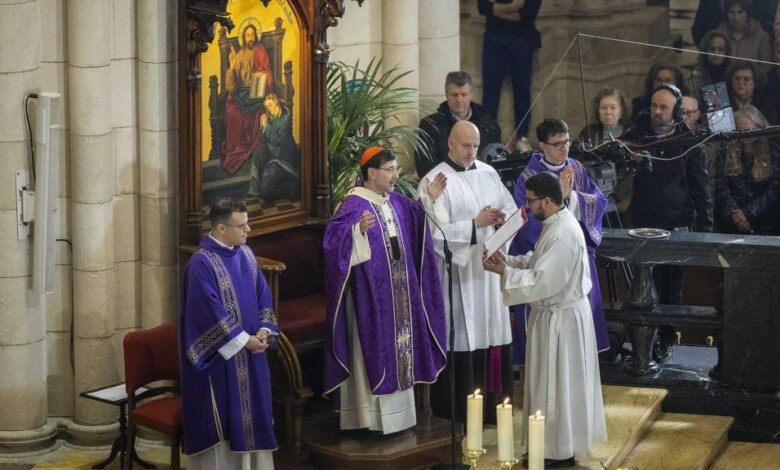
The events at Madrid’s Almudena Cathedral (Catedral de la Almudena) reflected the profound changes occurring in Spanish society. The memorial mass for the victims of the Adamuz (Adamuz) railway disaster became a rare forum for dialogue between state officials and the church. As political tensions in the country reached a peak, the words of Archbishop José Cobo (José Cobo) challenged the established order.
For many Spaniards, this ceremony was not just an act of remembrance but a moment when the issues of unity and responsibility took center stage. In attendance were not only the victims’ families but also key figures from both regional and national politics. Their presence highlighted how deeply the tragedy resonated across all levels of society.
Symbols and gestures
From the very beginning of the mass, it was clear: the atmosphere in the cathedral was unlike that of typical official events. The hall was enveloped in absolute silence, broken only by prayers and occasional sighs. Among those present were the president of the Comunidad de Madrid Isabel Díaz Ayuso (Isabel Díaz Ayuso), Senate President Pedro Rollán (Pedro Rollán), President of the Madrid Assembly Enrique Ossorio (Enrique Ossorio), Madrid’s mayor José Luis Martínez-Almeida (José Luis Martínez-Almeida), and other government representatives.
Special attention was drawn to the moment when Ayuso embraced the mother of the mayor of Carabaña (Carabaña), who lost her son in the disaster. This gesture became a symbol of human solidarity, transcending political differences. However, not all politicians showed unity: opposition representatives in the Madrid Assembly were absent, and the government delegation arrived later, taking their seats with visible tension.
A call for truce
In his sermon, Archbishop Cobo did not confine himself to religious topics. His words were addressed to everyone embroiled in the political disputes surrounding the tragedy. He reminded them of the need to abandon ‘ideological bunkers’ and called for mutual support. ‘When we are faced with pain, it is important not to withdraw into ourselves, but to seek paths to unity,’ he declared from the altar.
Cobo recalled the names of the victims, among them Madrid residents: Samuel, Jesús, Trinidad, Pablo, Mari Carmen, and Francisco Javier. He emphasized that tragedy knows no party lines, and that everyone present bears responsibility for the societal climate. His words stirred noticeable emotion among the politicians, many of whom are used to public confrontations even at moments like this.
Silence and glances
During the liturgy, all eyes were fixed on the pew where government representatives were seated. Tension peaked when the government delegate, arriving later than the others, took a seat between Ossorio and the mayor of Madrid. At that moment, the room fell silent, and the exchange of gestures between the politicians became a topic of discussion after the ceremony.
The service was accompanied by Psalm 23—’The Lord is my shepherd; I shall not want.’ Only after the mass concluded did applause break out, as Ayuso was leaving the cathedral. Until then, no one allowed themselves to show emotion, as if everyone understood: today was not the time for the usual political games.
Between ritual and reality
The organization of the ceremony resulted from cooperation between the largest dioceses in the region—Madrid, Alcalá de Henares, and Getafe. A special role was played by the bishop of Getafe, who began the service with a personal address to the brother of one of the victims, the mayor of Carabaña, and his mother. This moment lent the mass a particularly emotional tone.
Among the guests were representatives of various political factions: from Partido Popular to Vox and PSOE. However, the absence of opposition members in the Madrid Assembly and the limited presence of other parties further underscored existing divisions. Even in a time of collective mourning, political barriers remained insurmountable for many.
Signals for society
The funeral mass at Almudena was not only an act of remembrance but also a kind of maturity test for Spanish society. Archbishop Cobo’s call to abandon ideological barricades sounded especially poignant against the backdrop of ongoing conflicts between regional and national authorities. On this day, even the staunchest opponents were forced to temporarily set aside their differences, although the tension did not disappear entirely.
Perhaps it is precisely such moments that remind us that behind political battles are real human lives. And sometimes, even the strongest walls may waver under the pressure of shared grief.