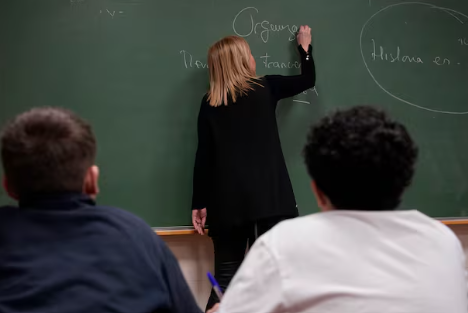
This week, the international TALIS 2024 survey once again drew attention to the situation of teachers in various countries, but Madrid remained absent from the discussion. Unlike in previous years, the regional authorities decided not to provide their own data for analysis. This decision caused confusion among teachers and experts, since it is now impossible to understand how Madrid’s teachers are faring compared to their colleagues in other regions.
The reasons for this step lie in the results of the previous study. In 2018, Madrid ranked among the leaders in levels of stress and overload among teachers. They complained about excessive teaching hours, bureaucratic paperwork, lack of time for preparation, constant pressure from parents, and a lack of support from the administration. At that time, the region topped most of the negative indicators associated with professional burnout and unstable working conditions.
Since then, according to many, the situation has only worsened. The regional authorities have not only failed to take steps to improve conditions, but have also preferred to keep the problems out of sight. The promised reform to reduce teachers’ workload remained on paper—for thousands of teachers, nothing has changed. The student-to-teacher ratio remains the highest in the country, while temporary contracts and working at multiple locations have become the norm for many professionals.
There is growing concern over the increasing number of teachers leaving the profession. Lack of recognition, constant overload, and job insecurity are forcing many to seek other opportunities. In Madrid, this trend is particularly evident: permanent teachers are being replaced by temporary staff, who are forced to juggle several schools just to secure a full-time position.
Instead of implementing real solutions, the authorities make loud statements and ignore the key issues. There is no comprehensive support program, no investment in professional development, and not even an acknowledgment of the crisis itself. Madrid also lags behind in environmental education: schools suffer from poor ventilation and lack of climate control, while sustainability projects remain purely rhetorical. The situation in digitalization is no better—implementation of new technologies is slow, and private schools have greater freedom, further deepening inequality.
Constant cuts in time allocated to teacher training and the lack of investment in professional development contradict the stated pursuit of “excellence.” Per capita education funding in the region remains the lowest in the country and one of the worst in Europe relative to GDP.
Experts are convinced: if the authorities truly cared about the future of education, they would review the academic workload, reduce the number of students per class, invest in teachers’ emotional well-being, and ensure staff stability. Instead, there is silence and attempts to hide inconvenient facts.
In response to the current situation, the opposition is preparing an initiative in the regional parliament, demanding immediate changes from the government. Teachers in Madrid deserve better, and the education system needs real support, not merely empty promises.