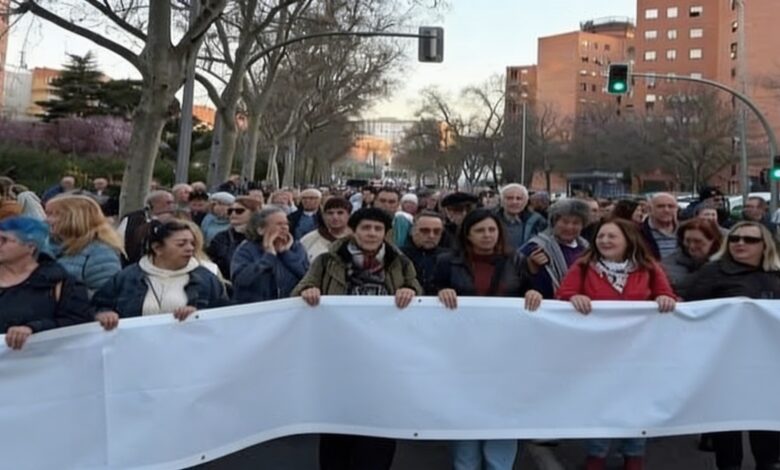
In Madrid, access to medical facilities directly affects residents’ quality of life, especially for the elderly. Recent changes to the bus schedules serving Ramón y Cajal have impacted tens of thousands of people for whom timely doctor visits are not just a matter of convenience, but of health. As El Pais notes, the decision to increase bus frequency came after prolonged pressure from local residents and community organizations.
In the San Blas-Canillejas district, residents have long struggled with overcrowded buses and an insufficient number of departures on Route 165, which connects them to Ramón y Cajal. After a series of protests and meetings with transport authorities, the schedule was revised: buses now run more frequently, and the first departure is earlier. This has reduced waiting times and the number of patients, many of whom are elderly, arriving late for appointments.
However, not all neighborhoods have seen improvements. In Ciudad Lineal, the situation remains tense: there is still no direct route to Ramón y Cajal, so residents have to make several transfers or spend significant amounts on taxis. According to El Pais, many patients are forced to spend up to an hour and a half traveling, which is particularly difficult for older people and those accompanying those who are ill.
Transport challenges
The problem is exacerbated by the lack of a metro station near Ramón y Cajal. The nearest stop, Begoña, is at a considerable distance, and walking from it to the hospital takes at least 15 minutes. For many patients and their companions, this becomes a serious obstacle, especially in bad weather or for those with limited mobility.
Taxi drivers and private car owners note that parking near the hospital is almost always full, and waiting for a free space can take up to half an hour. This causes additional congestion and slows down public transport. In the morning, the situation becomes especially difficult: long lines of cars and taxis, as well as crowds at the bus stops.
Despite the increase in the number of bus services, many residents of San Blas still believe this is not enough. In some areas, such as Las Rosas, Rejas, and Simancas, route 165 does not operate at all, and locals continue to demand the opening of new lines. Community organizations have already stated that they do not intend to stop at what has been achieved and will push for further changes.
Voices of the neighborhoods
In Ciudad Lineal, activists have collected thousands of signatures for a petition to open a direct bus route to Ramón y Cajal. According to their calculations, about 5,000 residents visit the hospital every day, and current transport schemes cannot handle the passenger flow. Options requiring transfers by metro or bus involve significant time and costs, while a taxi ride can cost tens of euros.
Residents propose creating a new route that would connect all key areas of Ciudad Lineal with Ramón y Cajal, passing through major social facilities and medical centers. According to them, this would significantly reduce travel time and improve access to medical care for thousands.
While authorities promise to consider the proposals and study transport flows, residents continue to face daily challenges. In the morning, long queues of taxis line up at the hospital entrance, and buses are often delayed due to traffic jams. Many patients are forced to plan their trips in advance to avoid missing their appointments.
Context and consequences
The transport situation at Ramón y Cajal highlights a broader issue of access to healthcare facilities in Spain’s major cities. In recent years, similar protests have taken place in areas where hospitals are far from metro stations or major transport hubs. In 2025, residents of Vallecas managed to increase the number of buses to their local hospital after a series of campaigns and petitions. In other cities such as Barcelona and Valencia, local authorities have already begun to implement special routes for patients to ease access to medical services.
In Madrid, the issue of hospital transportation accessibility remains pressing, especially for seniors and families with children. Solutions such as the recent changes to bus schedules serving Ramón y Cajal may set an example for other neighborhoods where residents face similar challenges. However, experience shows that real change requires not only government initiatives but also active involvement from local residents.