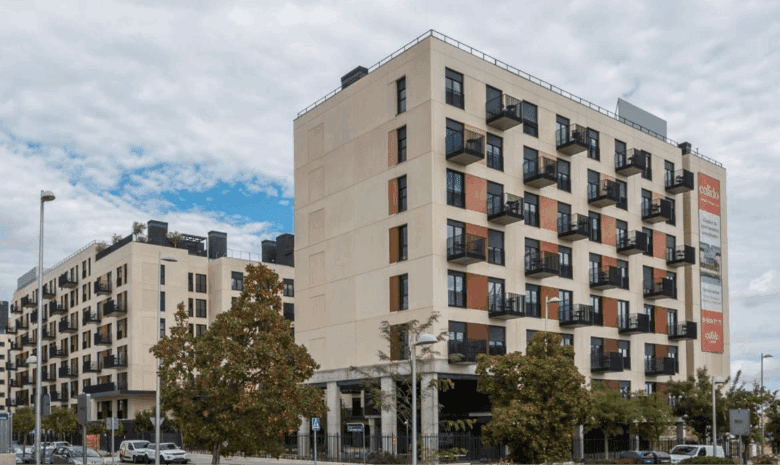
A New Construction Record: Valdebebas Sets New Standards
In the Valdebebas area in northern Madrid, a large-scale residential complex has been completed, already hailed as the country’s largest hybrid industrialized building. The project, developed by Dazia Capital and Aermont Capital, marks a significant milestone for Spain’s construction sector. Over the course of 18 months, an eight-story building covering nearly 20,000 square meters and consisting of 500 apartments was erected here.
The complex’s key feature is the use of the innovative CREE Buildings technology, which combines wood and concrete. This approach not only sped up the construction process, but also significantly reduced the project’s environmental impact. The load-bearing structure was assembled in just 77 days, with each new section completed every 11 days. Such pace was made possible by a high level of factory prefabrication: facades, balconies, and even window units arrived on site fully assembled and ready for installation.
Technology and teamwork: the driving forces behind the project
The development brought together the architectural bureau Ortiz y León, engineering firm Valladares, and modular construction manufacturer Molins. Their joint efforts made it possible to achieve an ambitious goal—creating modern housing for young professionals, students, and corporate clients, all seeking comfort and flexibility. In addition to serviced apartments, the building features extensive communal areas: a fitness center, coworking spaces, a swimming pool, landscaped green zones, and a rooftop terrace.
The project is aimed at those who value mobility and modern living standards. Facing a shortage of skilled labor, the industrialized approach reduced the number of on-site workers by three quarters, shifting most tasks to controlled factory environments. This not only sped up the process but also improved workplace safety.
Ecology and Efficiency: A New Perspective on Urban Construction
The implementation of a hybrid system with timber columns and composite floors helped reduce concrete use and cut CO₂ emissions by 70% compared to traditional methods. The complex received the prestigious BREEAM environmental certificate at the ‘Excellent’ level, and its total carbon footprint over its lifecycle turned out to be 40% lower than similar developments.
Industrialized construction has also reduced construction waste by 70% and noise pollution by more than half. This approach is becoming increasingly relevant for megacities, where environmental quality and quality of life are priorities. According to experts, such projects can attract young professionals to the industry and set new standards for future urban developments.