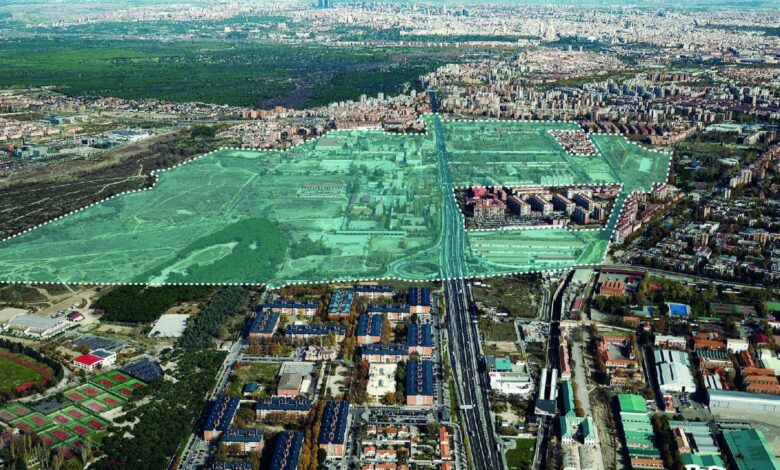
First Steps Toward a New District
One of Madrid’s most ambitious urban development projects in recent years has begun in the city’s southwest. The state-owned company Sepes, overseen by the Ministry of Housing, has announced a contract for the demolition of several buildings as part of a future residential complex. This move paves the way for the creation of a modern neighborhood where more than 10,700 affordable apartments are planned.
The contract for the work was awarded to Construcciones Arribas Gozalo S.A., with a deal valued at 1.45 million euros including taxes. The contractor will be responsible not only for demolishing the structures but also for the subsequent disposal of construction debris. The site, which formerly housed military facilities, will see the demolition of 37 vacant buildings, 10 guard posts, and a similar number of fences marking the internal boundaries of the area.
Transformation of Military Land
Most of the buildings slated for demolition were previously used by the military, but today they have no historical or architectural value. Only a few sites are protected as heritage landmarks—the rest have long since lost their original purpose. In total, the Campamento district contains 57 structures, the majority of which are no longer in use.
The demolition work will pave the way for the next stage—comprehensive development of the area. The infrastructure development project was approved in February of this year, and the main provisions and charter for the future homeowners’ association have also been adopted. Among the key documents is an agreement to move the A-5 highway underground, a step expected to significantly improve transport accessibility in the new district.
City of the Future: Housing, Green Spaces, and Community Life
The construction of this new residential complex is set to become Spain’s largest urban renewal project. Covering more than 211 hectares, the development will feature not just apartments, but also modern public spaces, parks, recreational areas, and social infrastructure. Only a quarter of the territory will be dedicated to housing, while the rest will serve the community—from green spaces to educational and cultural institutions.
Special emphasis is placed on ecology and sustainable development. The project includes solutions for using renewable energy sources, reducing carbon emissions, and expanding transportation routes that prioritize pedestrians and cyclists. This approach aims to deliver not just comfort, but also a high quality of life for future residents.
Once all approvals are obtained and the final documentation is confirmed, construction is expected to begin soon. The new district aims to set a benchmark for modern urban planning and become one of the most attractive places to live in Madrid.