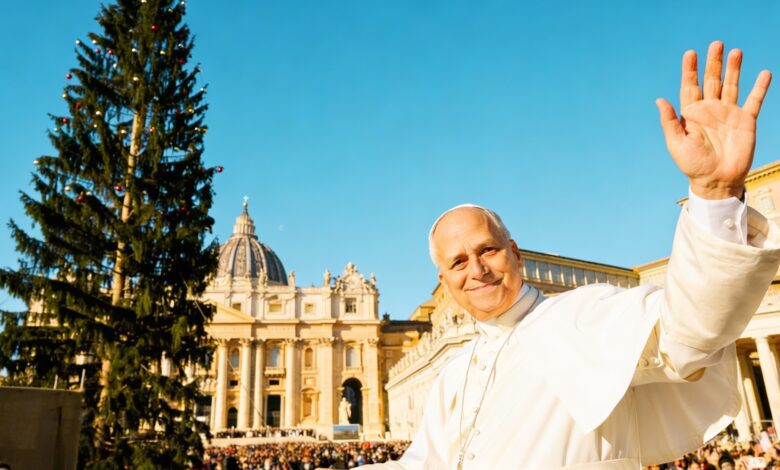
In early June, Madrid will be in the spotlight due to the visit of Pope León XIV. For the capital of Spain, this is not just a religious event but a major test for the city’s infrastructure, security forces, and healthcare system. Approximately two million pilgrims are expected to arrive, putting unprecedented pressure on all municipal services. Authorities are already assessing the potential impact on transportation, healthcare, and public order.
Organizing such an event requires coordination between different levels of government. According to EL ESPAÑOL, the preparation involves the city council, regional agencies, and the central government. Ensuring security on the streets, especially in areas where main events will take place, is a top priority. Authorities plan to deploy around 10,000 police officers, rescue services, and firefighters, along with the involvement of the National Police, Civil Guard, and specialists from the National Intelligence Center. This large-scale approach is due not only to the number of guests but also to the fact that activities will be held in different parts of the city simultaneously.
Complexities and challenges
An additional challenge arises from the coincidence of the Pope’s visit with a series of Bad Bunny concerts at the Metropolitano stadium. This means that security and transport resources will be split between two major events, increasing the risk of overload. Organizers are considering various scenarios to minimize crowd overlap and prevent critical situations. According to preliminary information, the main events are set to take place on Paseo de la Castellana, where a youth gathering and Sunday mass with a procession through iconic city locations, including Plaza Cibeles (Cibeles), are planned.
Exact venues have not yet been confirmed, but there is talk of possibly using the Iberdrola Music Experience site in southern Madrid. The visit program includes not only religious but also cultural, social, and official meetings. Among them are the Pope’s participation in a cultural forum at Movistar Arena, a visit to one of the city’s districts as part of a charity project, and meetings with government representatives in the Congress of Deputies. A large-scale floral ceremony at Almudena Cathedral (Almudena) is also planned.
Logistics and accommodation
The issue of accommodating pilgrims has become one of the main priorities for the Madrid Archdiocese. Plans are underway to create a network of temporary hostels based in religious institutions. Authorities are considering the use of around 300 faith-based schools, as well as parishes, residences, and sports complexes. At the same time, regional bodies are preparing a medical plan: emergency assistance will be provided on the streets by Summa 112, and hospitals are being placed on heightened alert.
An interdepartmental working group has been set up to coordinate all aspects, bringing together representatives from the government, the autonomous community, the municipality, and church organizations. This platform enables rapid resolution of logistics, security, and healthcare issues. However, the launch was marked by tension: the decision to convene the meeting came from the government delegation after public criticism of the regional and city authorities for their slow response. Nevertheless, both sides chose not to escalate the conflict and focused on the technical details of preparations.
Historical background
The last time Madrid experienced an event of this magnitude was in 2011, when the city hosted Pope Benedict XVI during World Youth Day. Back then, the capital welcomed over a million young people from 139 countries, with security managed by tens of thousands of volunteers and service personnel. The nighttime prayer at Cuatro Vientos airfield remains memorable, when thousands of people faced a severe summer storm. Since then, the city has not held such large-scale religious events.
Papal visits to Madrid have always marked significant moments for the city and the country. Before León XIV, the capital was visited by John Paul II, which strengthened the tradition of papal visits to Spain. Each time, these events required new solutions from the authorities and showcased the capabilities of the Spanish administrative system. This time, according to russpain.com, the scale of preparation and the level of interdepartmental coordination even surpass the experience of organizing the 2022 NATO summit.
Security issues at mass events in Spain are regularly a topic of discussion. For example, authorities recently tightened control over the publication of information about mobile speed cameras, leading to new fines for the administrators of chat groups and apps. This decision, as detailed in the article on new rules for drivers, shows how seriously the government approaches public safety and the management of large crowds.
In recent years, Spain has repeatedly hosted major international and religious events that require complex logistics and the coordinated work of all services. These have included visits by heads of state, large music festivals, and sports championships. Each time, such events have tested the city’s infrastructure and security system, as well as provided opportunities to introduce new technologies and crowd management methods. The experience accumulated over the past decades allows Madrid to face new challenges with confidence, despite all difficulties and risks.