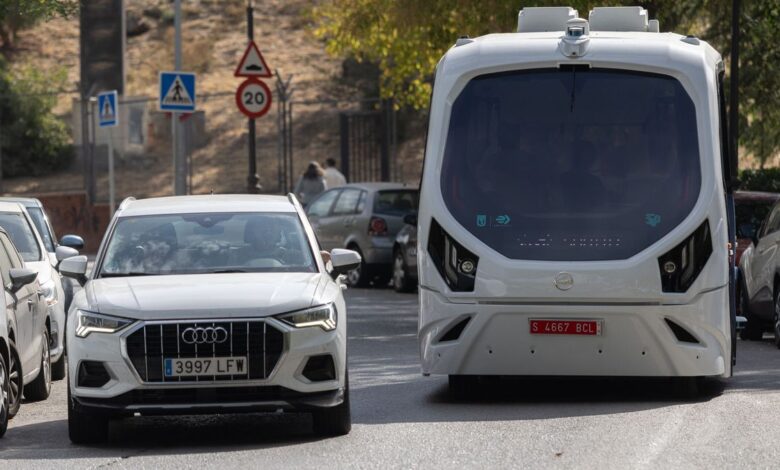
Madrid has completed its experiment with the first autonomous bus, which operated within the Casa de Campo park. The unusual white driverless vehicle sparked great curiosity among locals and tourists. The Madrid City Council has announced plans to introduce not only driverless buses by 2032, but also autonomous aerial vehicles for transporting goods and potentially passengers.
Tests and first steps
Over the past month, more than 2,500 people have had the chance to experience the new mode of transport firsthand. Unlike the familiar blue EMT buses, this prototype stood out not just for its appearance, but also for its lack of a driver. City officials see initiatives like this as an opportunity to position Madrid as a leader in adopting automated public transport solutions.
For now, such technologies are only being used successfully in limited areas, such as industrial sites or parks. Experts note that current autonomous control systems can handle simple routes and repetitive tasks, but adapting them to complex urban environments like busy intersections or heavy traffic will require several more years of development.
Technology and legal hurdles
Experts believe that the technical foundation for autonomous buses and drones already exists, but widespread adoption is being held back by strict regulations and the lack of a flexible legal framework. In Spain, the necessary laws are still being developed, and the approval process is moving slowly. Meanwhile, pilot projects using drones for deliveries are already underway in some regions, and Benidorm recently hosted Europe’s first unmanned air taxi test flight.
Madrid authorities plan to create special testing zones where new types of transport can be safely trialed and the public gradually prepared for their appearance on city streets. These so-called ‘sandboxes’ not only help work out technical details, but also build public trust, which remains cautious about the idea of driverless travel.
The future of urban transport
Experts emphasize that introducing autonomous buses and drones could improve safety, reduce pollution, and make city traffic flow more smoothly. However, this requires not only advancing technology, but also preparing a solid regulatory framework in advance to avoid issues like those that arose with electric scooters.
In the coming years, Madrid plans to continue experimenting with driverless transport in restricted areas, gradually expanding its use. If all goes according to plan, by 2032, residents of the capital will not only have access to regular buses but also new, fully autonomous routes, as well as drone services for deliveries and possibly even passenger transport.