Madrid’s attempt to create its own Feria de Abril has become one of the most talked-about topics this spring. For residents of the capital and all of Spain, this event is significant not only as a new leisure format but also as an example of how traditions can be reinterpreted or even distorted in pursuit of commercial success. The Madrilucía project, launching in May and running until June 2026, promises a large-scale show but raises questions about the authenticity and meaning of such initiatives.
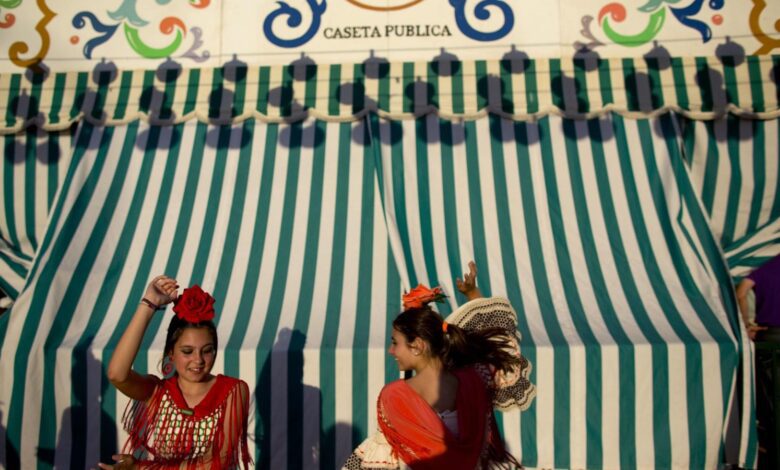
The organizers of Madrilucía set out to bring the atmosphere of the famous Feria de Abril from Sevilla to Madrid, choosing the Iberdrola Music venue in the Villaverde district as its stage. On the surface, everything looks impressive: hundreds of pavilions, traditional Andalusian décor, costumes, music, and even sand-covered alleys. Yet behind this facade, many see only an imitation lacking genuine soul and historical depth. Critics point out that a festival rooted in Andalusia’s unique traditions and lifestyle cannot simply be copied and turned into a tourist attraction.
Imitation or innovation
Unlike the original Feria de Abril, which thrives on informal connections, family traditions, and a unique atmosphere, the Madrid version comes across as a carefully planned commercial project. There is none of the spontaneity that makes the Sevilla celebration so special. Everything is designed for the mass consumer seeking vibrant experiences without delving into the true meaning of the event. Even Andalusians living in Madrid view the new format with skepticism, considering it a caricature of authentic culture.
Paradoxically, the capital, with its own festivals like San Isidro, has failed to make them truly popular among its residents. Now, instead of cultivating its traditions, Madrid is trying to borrow those of others, hoping to win over the public and attract tourists. This raises the question: does the capital really lack its own identity, or is it simply an attempt to cash in on the trend and interest in Andalusian culture?
Culture as Decoration
The entire Madrilucía concept is built on the idea of turning a traditional holiday into a product for mass consumption. The focus here is less on roots and history than on spectacle and the chance to snap impressive social media photos. Costumes, music, dancing—all of it becomes part of a carefully staged show, with every element designed for visual impact. But this very approach causes the most important thing to be lost: the sense of authenticity and uniqueness that cannot be recreated artificially.
In recent years, Madrid has increasingly become a testing ground for experimenting with cultural formats. For example, in February, the capital, alongside Barcelona and Seville, impressed with the scale and new approaches to city events, as detailed in the article about the unexpected cultural transformations of winter. However, the attempt to copy an Andalusian festival leaves many with the impression of artificiality and even provokes a certain cultural clash.
A Festival for the Consumer
The new Feria de Abril in Madrid is not aimed at locals, but rather at a certain audience—those seeking quick, intense emotions without delving into tradition. Here, identity becomes a temporary masquerade and culture serves merely as a backdrop for entertainment. Every detail is carefully crafted to create the illusion of a real celebration, but it is precisely this meticulousness that kills the spontaneity people travel to Seville for.
The most surprising thing is not the act of copying itself, but the scale and pride with which it is done. Madrid doesn’t just borrow someone else’s tradition—it turns it into a symbol of its own success, substituting cultural growth with a sheer accumulation of events. As a result, the capital risks losing its uniqueness, succumbing to the allure of quick fixes and fashionable trends.
The Feria de Abril in Seville has always been an event that is hard to explain and impossible to recreate elsewhere. Its strength lies in its local spirit, the strange mix of openness and exclusivity, and the traditions passed down through generations. The Madrid version feels like a beautiful decoration, a postcard from a place where no one truly lives.
In recent years, Spain has increasingly faced attempts to adapt regional festivals to the demands of mass tourism and commerce. Similar experiments have already been carried out in other cities, where traditional formats were reworked to attract a new audience. However, such projects do not always resonate with local residents or become part of city life. Cultural events that truly transform a city’s atmosphere usually grow from within, rather than being imported by template.