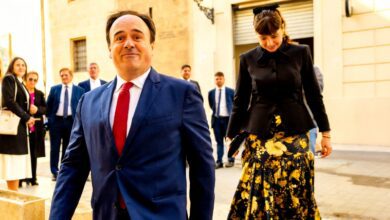
The high-profile arrest of the leader of one of the country’s most influential drug cartels has sent shockwaves through Spanish society. Issues of security, transparency within law enforcement, and financial oversight have once again come to the forefront. The court’s decision to remand Ignacio Torán, known as ‘Bugatti’, into custody could mark a turning point in the struggle between organized crime and the state.
According to investigators, Torán was not just another participant in the criminal scheme but the key organizer of a sophisticated cocaine trafficking network into Spain. His connections with a former senior police officer, as well as the scale of his operations, have astonished even seasoned experts. The investigation revealed that at least 73 tons of cocaine entered the country through his organization, hidden in fruit containers arriving from South America.
Searches uncovered numerous properties, luxury vehicles, and offshore accounts. Investigators were particularly interested in a villa worth over 10 million euros in a prestigious Dubai district, where, according to evidence, Torán lived alongside other figures from the international drug trade. Authorities note that a complex network of shell companies, registered both in Spain and abroad, had been established to launder proceeds from drug trafficking.
Connections and Influence
A key aspect of the case was the involvement of a former head of the economic crimes division in Madrid. His role in facilitating the unhindered entry of drugs and protecting the interests of the Torán clan highlights the extent to which corruption can infiltrate state institutions. The investigation found that Torán paid his accomplice over €32 million for organizing the import of 39 containers of cocaine.
The case materials mention other well-known criminal figures, including Alejandro Salgado Vega, known as ‘El Tigre.’ These connections ensured the continuous supply of drugs from Latin America. New evidence obtained from Torán’s mobile phone became the basis for his arrest and subsequent detention.
The anti-narcotics prosecutor’s office insisted on the immediate detention of the suspect after new evidence emerged. As a result, National Court judge Francisco de Jorge ordered Torán to be held in custody. The defendant exercised his right to remain silent.
International networks
The investigation uncovered a complex money laundering network built on shell companies and offshore accounts. In particular, two offshore entities registered in Delaware (USA) and Panama were identified. Millions of euros from drug sales were routed through these companies. Investigators also found six luxury cars seized during the search at Toran’s residence.
Special attention is given to how the criminal network integrated illegal profits into the legal economy. The use of front companies and real estate investments masked the true origin of the funds. A villa in Dubai became a symbol of the opulence and impunity seemingly enjoyed by cartel leaders.
The investigation revealed links between Spanish and international criminal groups. This confirms that Spain remains one of the key transit hubs for drug trafficking into Europe. The scale of operations and the level of those involved have raised concerns among experts and the public.
Response and consequences
The court’s decision to detain Ignacio Torán has sparked discussion not only among experts but also throughout society at large. Many are questioning how effective the current mechanisms for combating organized crime are, and how similar cases can be prevented in the future. Interest in this case is heightened by the involvement of law enforcement officials, which undermines trust in the system as a whole.
Recalling recent events, it’s worth noting that Spain has repeatedly faced high-profile scandals involving corruption and abuses among officials and security forces. For example, RUSSPAIN.COM previously provided a detailed analysis of the conflict between Elon Musk and the Spanish government over new restrictions on social networks and migration policy. In the article it was discussed, how the tightening of control over digital platforms and the mass legalization of migrants provoked a strong reaction from society and the business elite. These events clearly demonstrate that the issues of transparency and trust in state institutions remain highly relevant.
Further investigation and new arrests are expected in the near future. Experts do not rule out the possibility that additional incidents tied to international drug trafficking and money laundering may soon be uncovered. Interest in the Torán case remains strong, and its consequences could affect not only the criminal world but also the country’s political agenda.
In recent years, Spain has repeatedly become the scene of high-profile exposés related to international drug trafficking. One recalls the case when large shipments of cocaine were seized in the ports of Valencia and Algeciras, hidden in containers with fruit and other goods. Such operations are often accompanied by the arrests of high-ranking individuals and the uncovering of complex money laundering schemes. Despite the efforts of law enforcement agencies, the scale of the problem remains significant, and criminals’ new methods constantly demand improvement in control and investigative mechanisms.