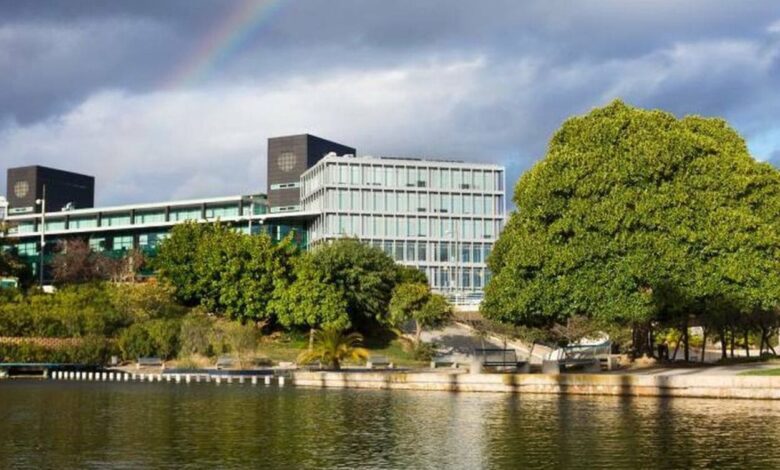
Thirty-three years ago, on the outskirts of Málaga, a technology park was established—a bold experiment at the time. Initially, it was home to just eight companies and just over a hundred employees. Today, this cluster has become one of the city’s main economic engines, and its impact on the life of Málaga and all of Andalusia is hard to overstate.
Over the past three years, Málaga TechPark has made a significant leap forward. Today, it employs nearly 28,000 people, and the annual turnover of the park’s companies has exceeded 4.1 billion euros. This has allowed Málaga to significantly close the gap with Seville, where the similar park Cartuja 93 (now Sevilla TechPark) has traditionally been seen as the regional leader.
Economic Impact
The influence of the technology park on the city and regional economy is striking. According to 2023 data, Málaga TechPark’s contribution to Andalusia’s GDP reached 4.8 billion euros, equivalent to 2.33% of the entire regional product. In terms of the province, the park generates more than 10% of GDP and almost 10% of all jobs. The numbers for Málaga itself are even more impressive: a third of the city’s economy and nearly a third of its employment are linked to the park’s activity.
Every euro earned in the park generates three euros for Andalusia’s economy. And each job here creates almost four new jobs in related industries. This is comparable to the impact of the construction sector in the region, highlighting the strategic importance of this tech cluster for Málaga’s future.
Rivalry with Seville
Although Seville is still ahead in several key indicators, the gap between the two cities is closing rapidly. The Seville park currently employs just over 31,000 people, with a turnover exceeding €5.5 billion. However, Málaga’s growth rate in recent years has allowed it to narrow the gap by several dozen percentage points.
Málaga currently hosts 715 companies, while Seville is home to 575 firms, 85 startups and spin-offs, as well as more than 850 research projects. Both parks set new records each year for the number of new businesses and innovative initiatives.
Technology and Innovation
Much of Málaga TechPark’s success is due to its focus on advanced technologies. The park is actively implementing solutions in artificial intelligence, cybersecurity, software development, renewable energy, and biotechnology. Experts note, however, that the park has significant potential for growth in microelectronics—a field where Seville still leads.
Since the late 1980s, the Institute of Microelectronics has operated in Seville, and since 2008 it has been located directly within the technology park. Companies such as Alter Technology, Anafocus, and WoodSwallow are also based here, forming a powerful cluster in microchip development and testing.
Momentum for the Future
In the coming years, Málaga expects to make significant strides in microelectronics as well. By 2030, the TechPark plans to open an Imec research center—one of the world’s leading organizations in microchip technology. The arrival of Imec is expected to attract new investment to Málaga and create hundreds of high-tech jobs.
While construction of the center is still in the planning stages, several major companies have already expressed interest in locating their divisions near the future site. According to the park’s management, each such investment could exceed 50–60 million euros, as the microelectronics sector requires special conditions: clean rooms, water purification systems, and dry air systems.
Development strategy
Unlike mass production, Málaga is focusing on microchip design and testing. There simply isn’t enough available space to build a large-scale manufacturing plant—it would require nearly 200 hectares of land. However, research and engineering centers do not need facilities of that size, and this is precisely the direction in which the park will grow in the coming years.
The arrival of Imec and other high-tech companies could mark a new phase of growth for Málaga. The park is already considered one of Andalucía’s key infrastructure assets, and its significance for the region’s and city’s economy continues to grow. Ahead lie new challenges and opportunities that, until recently, seemed like science fiction.