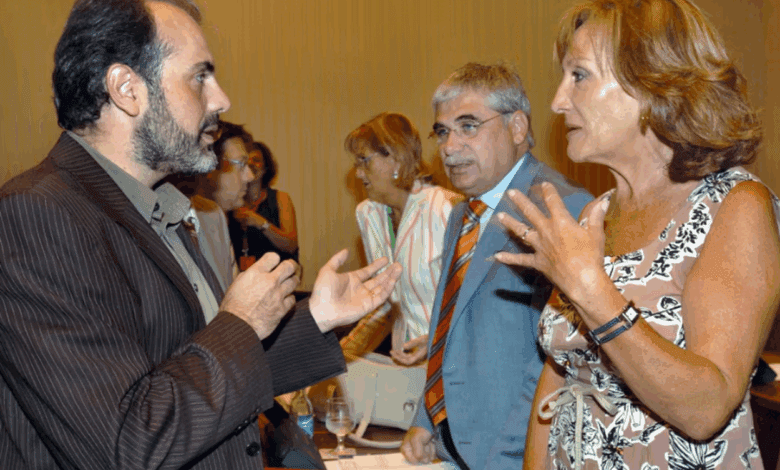
Maria Eugènia Cuenca, whose name is forever etched in Catalonia’s history, has passed away at the age of 79. She became a symbol of change for an entire generation, as she was the first woman to serve as a consellera in the autonomous government. For many, her journey exemplifies how individual determination can reshape the political landscape.
In the early 1990s, when Cuenca joined the Catalan government, the region was only beginning to recognize the importance of women’s participation at the highest levels of power. Then-president Jordi Pujol appointed her as Minister of Public Administration, a bold move that marked a significant breakthrough in local politics. However, Cuenca’s path to the top was far from easy.
A Trailblazing Journey
Maria Eugènia was born in Calatayud (Calatayud) in November 1947. Her career began long before she came to the forefront of Catalan public life. In 1986, she was elected to the Congress for the first time as part of the CiU coalition, and three years later she joined the leadership of Convergència Democràtica de Catalunya (CDC). At that time, women rarely held leadership positions, and Cuenca often faced distrust and open skepticism from her colleagues.
From 1986 to 1986, she served as Secretary General for Education in the Catalan government. This brief but intense period became a kind of survival school for her in the male-dominated world of politics. Even then, Cuenca proved herself as someone willing to make unpopular decisions and stand her ground, even if it meant going against the party line.
A Time of Change
The real breakthrough came in 1992, when Cuenca was appointed Minister of Governance. She became the first woman to join the Catalan government. This milestone sparked a whirlwind of discussion in political circles and in society. Many saw her appointment as a symbolic victory, but Cuenca herself preferred to focus on her work rather than her gender.
During her three years as minister, she focused on strengthening the region’s autonomy. Her actions often sparked heated debates, as Cuenca was never afraid to go against the current. She played an active role in developing new governance mechanisms that allowed Catalonia to gain greater independence in handling domestic affairs.
Political Legacy
After leaving the government in 1995, Cuenca did not exit the political arena. In 1999 and 2003, she was again elected as a deputy to the Catalan parliament from the CiU coalition. Her experience and authority enabled her to influence key decisions, although she preferred to stay out of scandals and public conflicts.
Both colleagues and opponents acknowledged her skill in conducting complex negotiations and finding compromises where others saw only dead ends. Even after ending her active political career, Cuenca remained a respected figure whose opinions were widely heeded.
Legacy and Recognition
The news of María Eugenia Cuenca’s death sparked a wave of condolences among politicians and public figures in Catalonia. Many note that it was her efforts that enabled the region to advance in issues of equality and self-governance. Her passing is not only a personal loss for her loved ones, but also a significant event in the political history of Catalonia.
Today, Cuenca’s name echoes once again through the halls of parliament and the streets of Barcelona. Her contribution to the region’s development is hard to overstate, and the example of her life continues to inspire new leaders. Time will tell if today’s politicians can preserve and build upon what she started many years ago.