In the very heart of Madrid, authorities are planning a major redevelopment: a Center for the Memory of Terrorism Victims is set to open here. To make this possible, the national and regional governments have struck a major real estate deal, immediately sparking a wave of local discontent. Amid soaring rents and property prices, and a severe shortage of affordable housing, many city residents believe this new project will only make matters worse.
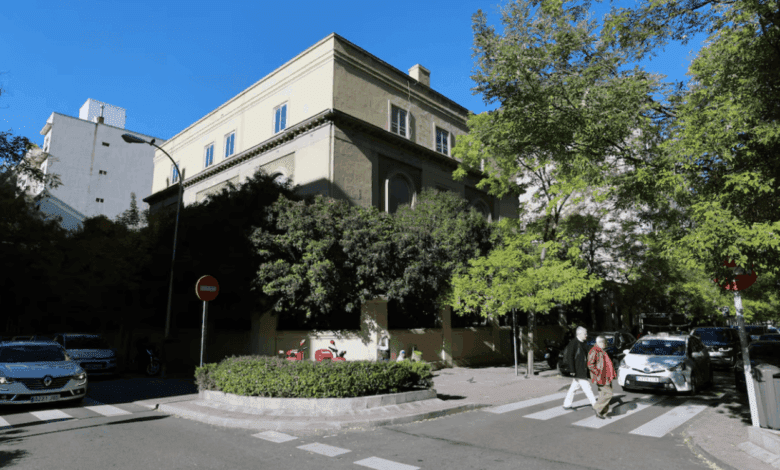
The core of the agreement is the transfer of several floors in a building on Duque de Medinacelli street, overlooking the famous Palace hotel, into state ownership. In return, regional authorities will receive a spacious 300-square-meter apartment, giving them complete control over the mansion on Núñez de Balboa street. Additionally, the state will pay the difference in value—nearly €1.7 million. Many see the operation as resembling a board game, with some of the most coveted properties in the city center at stake.
City versus tourists
Residents have responded sharply negatively. Neighborhood association representatives say they do not oppose the creation of a memorial, but strongly disagree with the chosen location. According to them, central Madrid already suffers from a flood of tourists and a shortage of infrastructure for permanent residents. The Barrio de las Letras district, where the memorial is planned, has long needed not new cultural venues, but affordable housing and social programs.
People worry that another major development will drive prices even higher and push out local residents. The problem is especially acute for the elderly and young people, who can no longer afford to live in their own neighborhoods due to skyrocketing rents and the conversion of apartments into tourist rentals.
Deal background
The property exchange deal was made possible by old agreements between the state and autonomous communities signed back in the 1980s. At that time, the central government transferred some of its buildings to the regions for their administrative offices. Now, decades later, the parties have decided to reclaim the most valuable properties to launch new projects.
As a result of the exchange, Madrid gains full control of the mansion on Núñez de Balboa street, which previously housed the international vaccination center and the scholarship office. The state, in turn, becomes the owner of several floors of the building on Duque de Medinaceli, which will host the future memorial. Property assessments found the values differ, so the state had to pay the region an additional €1.7 million.
Large-scale project
The planned Memorial Center for Victims of Terrorism will occupy about 4,000 square meters for exhibition halls. The entire building, originally constructed in 1922 as the Palacio de Hielo y del Automóvil, will have 15,000 square meters and three separate entrances after renovation. The remaining spaces will be allocated by the Ministry of Finance, which will decide how to use the areas not occupied by the memorial.
The memorial will cover all tragic events related to terrorism in Spain since 1960—from the bombing carried out by the DRIL group in San Sebastián to modern-day attacks. The exhibition will highlight the actions of ETA, GRAPO, Islamic radicals, as well as lesser-known groups. This new center will be the second of its kind in the country—the first is already operating in Vitoria-Gasteiz.
Politics and housing
For regional authorities, the deal is a way to optimize property management and gain full control over a prestigious building. At the same time, many residents believe the authorities are ignoring the real needs of the city center. People are demanding that such properties be used to create social housing, rather than new cultural spaces, which they argue only increase the tourist burden.
Madrid authorities had previously announced the opening of their own memorial center for victims of terrorism on Carrera de San Jerónimo, where the Vice-Ministry of Justice and Victim Support is currently located. However, attention has now shifted to a new deal that could transform the face of one of the capital’s most expensive neighborhoods.