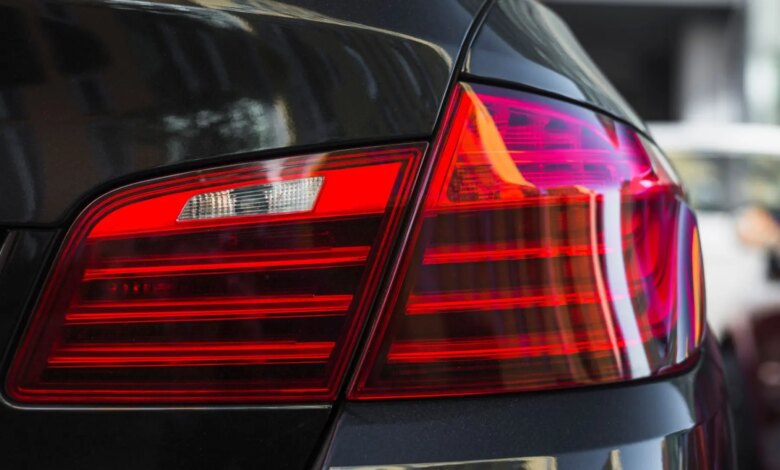
Modern premium cars have long moved beyond simple lighting functions. Headlights and taillights have become true feats of engineering: they can put on light shows, project brand logos onto the road, and automatically adjust their brightness to avoid dazzling other drivers. But behind this technological brilliance lies a serious problem faced by thousands of car owners—the incredible complexity and expense of repairing even the smallest damage to the lighting system.
Today, replacing a burnt-out LED or fixing a crack in the housing often means having to replace the entire expensive lighting unit. The reason is simple: most modern headlights and taillights are hermetically sealed, and their internal circuits are so sophisticated that accessing individual components is nearly impossible. As a result, owners face bills that can exceed a whole month’s rent, while repair shops simply shrug—there’s no other way to fix it.
A technological dead end
Chasing striking design and innovation, the automotive industry has backed itself into a corner. Each new model lineup introduces increasingly complex lighting solutions, bringing new headaches for service centers. Intervening in the wiring of rear lights requires dismantling the trunk trim and removing decorative panels, which often break or start to creak after being reassembled. As a result, even a simple bulb replacement can turn into a multi-hour quest with an unpredictable outcome.
In this situation, the German group Mercedes-Benz decided to take the lead. The company has filed a patent application that could completely change the approach to car light repairs. The core idea is to radically simplify access to electrical connections by moving them from hard-to-reach areas to an open space inside the trunk. Now, to reach the right connector, it will be enough to open the trunk or remove a small protective panel.
Simplicity instead of chaos
The main innovation is the creation of a modular connection system. Each lighting unit will connect to the wiring through a standard port located in an easily accessible place. This approach not only reduces repair time dramatically but also allows individual parts of the headlamp to be replaced without touching the entire unit. For owners, this promises significant savings, while for technicians, it means relief from tedious and nerve-wracking interior disassembly.
The emergence of such architecture could be a real breakthrough for the entire industry. At a time when sustainability and the right to repair are becoming key trends, Mercedes’ idea seems especially relevant. After all, discarding an entire unit due to a minor malfunction is not only expensive, but also wasteful in terms of resources. This new patent could change the way repairs are viewed, making them logical and rational.
Impact on manufacturing
The shift toward simpler and more accessible connections benefits not only end users but also automakers themselves. Automating assembly lines becomes easier when robots can quickly and accurately connect plugs without risking damage to complex electronics. This reduces the number of factory defects and lowers the likelihood of hidden flaws that appear after purchase.
Moreover, the modular design opens up new possibilities for customization. Owners will be able to easily upgrade lighting, choosing new features or signature animations without costly visits to official dealerships. This approach could set a new standard in the premium segment, where individuality is valued as highly as technology.
The test of time
However, there is always a gap between a patent and mass adoption. Mercedes will have to prove that the new system is as reliable and resistant to moisture and corrosion as traditional solutions. After all, taillights are one of the most vulnerable parts of a car body, constantly exposed to water, dirt, and temperature fluctuations. Any design flaw can lead to large-scale recalls and reputational losses.
Nevertheless, if the experiment proves successful, other manufacturers are likely to follow Mercedes’ lead. This could mark the end of the era of ‘black boxes’ in automotive lighting, when even minor malfunctions turned into costly problems. In the future, luxury will be measured not only by the number of LEDs, but also by how quickly and easily technology can be restored to working condition.
Mercedes-Benz is one of the most recognizable brands in the automotive world. With a long-standing history, the company is renowned not only for innovations in safety and comfort, but also for bold engineering solutions that often set industry standards. In recent years, Mercedes has actively invested in the development of modular platforms and smart systems, aiming to make its cars not only technologically advanced, but also as easy to service as possible. The new patent is another step in this direction, one that could change the rules of the game for the entire industry.