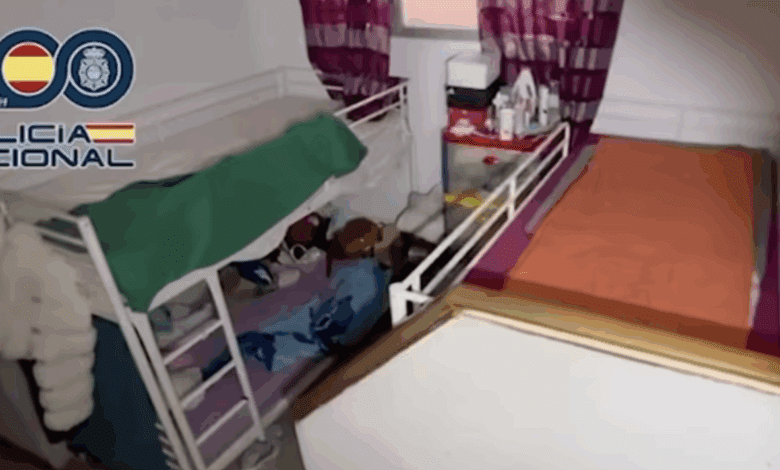
The uncovering of an underground brothel in one of Madrid’s upscale neighborhoods has raised serious concerns across Spain. Behind the facade of an ordinary residential building operated a large-scale exploitation network, where dozens of women lived for years under constant pressure and threats. This incident highlights how difficult it is to detect such crimes even in prosperous areas of the capital.
According to El Pais, a brothel disguised as a regular business had operated for 11 years in the Arturo Soria district. Neighbors noticed a steady stream of people coming and going, but had no idea what was really happening. In a short period of surveillance, police recorded about 500 visits, which gave an idea of the scale of the operation. Investigators estimate the annual turnover to be around one million euros.
Control system
Inside the house, a strict order was enforced. Most of the women, originally from Latin America, lived crammed in a basement without proper conditions. Five managers monitored strict compliance with the rules and punished any slightest violation. Any deviation from the set routine led to fines or other forms of coercion.
When a special alarm was triggered, the women had to quickly change clothes and come out to the client. It didn’t matter what they were doing at the moment—resting, eating, or trying to freshen up in the shared bathroom. The managers demanded total obedience, and any refusal to serve certain clients, including minors, resulted in severe penalties.
Life Under Surveillance
The entire house was equipped with a video surveillance system. The ground floor was used as a guest reception area, while in the basement women were effectively isolated from the outside world. All victims had their documents taken away, leaving them unable to leave the house or seek help. Some had not left the building for years.
The business was run by a married couple from Colombia and Ecuador, who carefully monitored all financial flows. On the day of their arrest, one of the managers was heading to the bank with a large sum of cash collected in just one weekday. This points to the high profitability and long-term stability of the illegal business.
Scale and Consequences
Police say that some clients of the brothel were minors, which makes the case especially serious. The women tried to refuse such encounters, but the managers would not tolerate disobedience. Notices of punishments for breaking the rules hung throughout the house, heightening the atmosphere of fear and hopelessness.
The women were required not only to work with clients, but also to clean the premises. Some could leave on outcalls, but most remained locked inside. According to El Pais, two victims are now under state protection and serving as witnesses.
Context and Similar Cases
In recent years, Spain has repeatedly uncovered cases of women being exploited in underground brothels, especially in major cities. Police regularly report new investigations related to human trafficking and violations of migrants’ rights. In 2025, a similar operation was exposed in Barcelona, where victims were also kept under constant surveillance and threats. Despite tougher laws, such schemes continue to exist, highlighting the need for new measures to protect vulnerable groups and strengthen control over illegal activities.