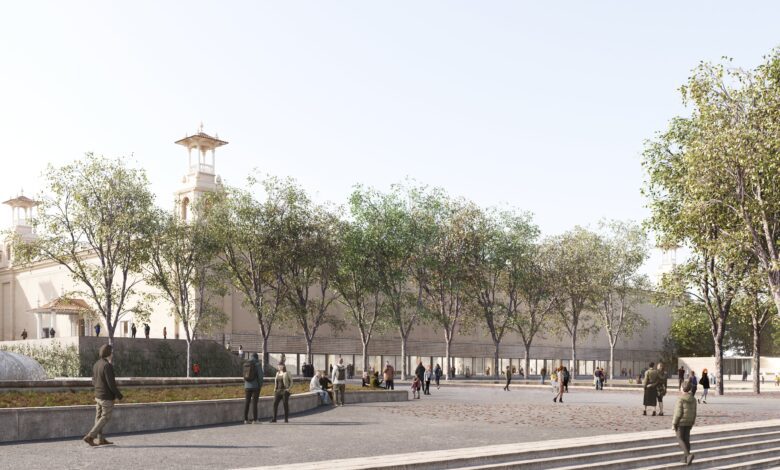
The MNAC renovation in Barcelona will be one of the most notable cultural events for the people of Catalonia in the coming years. With the expansion, the museum will gain additional space, allowing a significant part of the collection—previously unavailable due to lack of room—to be displayed to the public for the first time in many years. A new entrance on Plaça Bohigas at the foot of Montjuïc will bring the museum closer to the city center and make access easier for visitors of all ages.
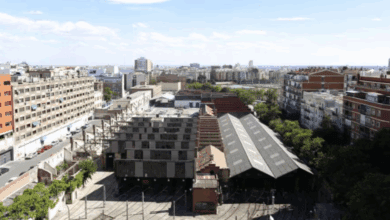
According to El Pais, the project involves a complete overhaul of the historic Palacio Victoria Eugenia building, located below the museum’s main complex. Architects HArquitectes and Christ & Gantenbein, who won the competition, proposed a bright and open space while preserving the historical value of the pavilion, originally designed by Puig i Cadafalch. The total budget for the works stands at €112.6 million, with completion scheduled for 2029—to coincide with the centenary of the 1929 World’s Fair.
New opportunities for the collection
Currently, MNAC holds around 300,000 works of art, but only about 20% are on public display. The rest are kept in storage or temporarily loaned to other institutions. Upon completion of the renovation, the museum will be able to expand its exhibition space to nearly 20,000 square meters, allowing more unique pieces to be showcased, including medieval art and works by contemporary artists. As El Pais notes, the expansion will make it possible to fulfill the vision of the museum’s first director, Joaquim Folch i Torres, which was interrupted by the historic upheavals of the 20th century.
A key aspect of the project is improving infrastructure and accessibility. A new entrance on Plaça Bohigas will provide direct access to the museum, bypassing the many stairs that previously made visiting difficult for people with limited mobility. This solution has received support from all levels of government: Barcelona’s mayor Jaume Collboni, Generalitat president Salvador Illa, and culture minister Ernest Urtasun took part in the project presentation, highlighting its importance for the city and the region.
Plans and challenges
Despite large-scale architectural changes, the concept for the future exhibition is still in development. Museum director Pepe Serra emphasized that creating a new museum narrative is a collective effort that requires time and the involvement of the professional community. Meanwhile, MNAC president Joan Oliveras sees the renewed museum as a place for cultural dialogue and the exchange of ideas, which is especially relevant for contemporary Barcelona.
Minister of Culture Ernest Urtasun noted that the expansion will not only double the exhibition space but also showcase new artistic genres such as photography, comics, and illustration. This will allow the museum to become more open and modern, as well as attract a new audience. Generalitat president Salvador Illa compared the project to other city landmarks, such as the completion of the Sagrada Familia and the launch of the Sagrera station, underscoring its national significance.
Architectural solutions
The project envisions connecting the Palacio Victoria Eugenia with the main museum building via long corridors, creating a unified museum space. The architects emphasize minimal intervention in the historical structure to preserve the unique appearance of the pavilion, which was one of the first concrete buildings in Barcelona and was used for exhibitions as early as 1929. For the first time, details of the reconstruction were presented to the public, sparking interest among professionals and locals alike.
In recent years, the expansion of MNAC and the future of its collections have repeatedly sparked public debate. For instance, the issue of returning the frescoes from the Sijena Monastery recently drew attention and was examined in detail in an article about the competition for transporting these unique works of art— more details on MNAC’s decision regarding the Sijena frescoes.
In recent years, Spain has seen a trend of updating and expanding major museums. For example, in Madrid, the renovation of the Museo del Prado was completed, boosting visitor numbers and introducing new exhibitions. In Valencia, the modernization of the art museum attracted growing interest from young people and tourists. Such projects not only help preserve cultural heritage, but also drive urban development by attracting investment and creating new jobs. In Catalonia, the MNAC’s renewal could serve as a model for other regional museums seeking greater openness and integration into city life.