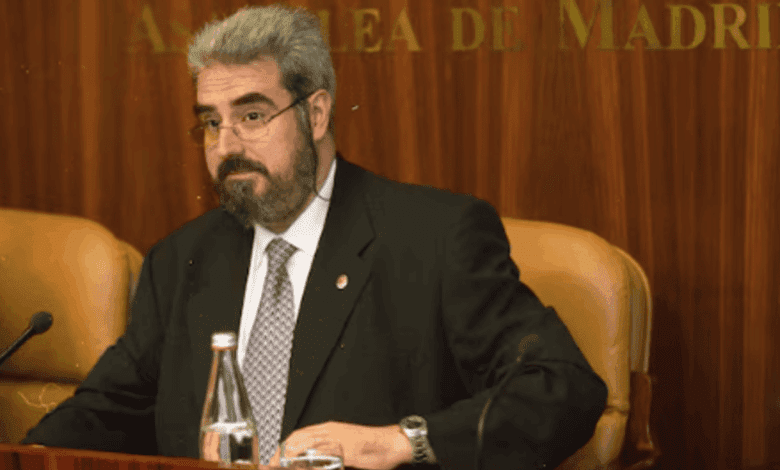
On Monday, Madrid bid farewell to a man who became a symbol of integrity and principle in Spanish politics. Modesto Nolla Estrada, a socialist who dedicated years to exposing corruption schemes in the capital region, passed away at the age of 70. His name was often heard in the halls of the Assembly, but he never sought fame—his priority was always to serve the public and defend the interests of the city’s residents.
In the late 1990s, when Madrid’s political life was in full swing and journalists were chasing headlines, Nolla remained one of the few unafraid to speak openly about problems. His office was always open to those seeking truth rather than compromise. Even during the height of summer heat, when the parliament building emptied out, he kept working, immersed in documents and reports that could shed light on the darker side of those in power.
Principles and actions
Together with his loyal assistant Maxi, who would spend hours sifting through archives and ministerial files, Nolla gathered evidence to ensure his accusations were irrefutable. Once, while discussing a harmful factory on the city outskirts, they didn’t notice a journalist enter the office. The entire table was covered with photos, diagrams, and charts—everything needed to make sure not a single fact was overlooked.
Noya never sought popularity. He didn’t aim to make headlines or trade in information. His goal was simple: to expose abuses and defend the interests of ordinary people. His speeches in parliament were like hammer blows—precise, well-argued, leaving no room for excuses. He wasn’t afraid to stand up to those in power, even if it meant making enemies.
Scandals and Integrity
In 2001, Noya was among the first to speak out publicly about questionable changes to land laws that enabled a lucrative deal for Real Madrid. The story sparked a public outcry, as millions of euros and the interests of influential figures were at stake. Shortly after, he found VIP box tickets left on his desk at the stadium. Noya’s reaction was instant: he tore them up in front of witnesses, making it clear he had no intention of becoming part of a system where gifts and favors outweigh principles.
His appearance was always impeccable—a tailored suit, a neat tie. But behind this strict exterior was a man unafraid to go against the current. He served as the chief analyst and strategist for the Socialists in Madrid, preparing indelible, fact-based arguments for party leaders. His work laid the groundwork for many high-profile exposés, including investigations into Gürtel and Púnica.
Legacy and Influence
Over the years, the political landscape changed, but Noia remained true to his convictions. Even as former colleagues faded into the background or shifted their views, he continued to keep up with events, stayed in touch with friends, and never hesitated to voice his opinions. His honesty and openness earned respect even from those who disagreed with his politics.
He bore no grudges against critics, avoided public disputes, and never tried to justify himself. At times, he even endorsed the publications of former opponents if he considered them fair. Above all, he valued remaining true to himself and his principles.
A man of his time
Modesto Noia became a role model for an entire generation of politicians and citizens. His hard work, integrity, and commitment to justice made him a figure not easily forgotten. At a time when public trust in institutions is declining, such people are especially valuable. He was more than just a deputy — he was the conscience of Madrid politics, someone unafraid to speak the truth and act with integrity.
Today, in his absence, many wonder: who will carry on his work? Time will tell. But the memory of Modesto Noia will remain with those who believe that politics can be honest and that serving society is a true calling.