The events at the Ceuta border have once again reminded Spaniards of the fragility of human life and how a normal workday can suddenly turn into a struggle for survival. As the system for receiving underage migrants faces serious strain, the actions of one woman became a symbol of civic courage and solidarity. This incident not only stirred the local community, but also made people reflect on the genuine risks faced by both migrants and those who happen to be nearby in a critical moment.
On Wednesday morning, as storm Kristin raged over Ceuta, the city was under threat from dangerous waves. That day, Lorena Becerra, a municipal cleaning service worker, received strict instructions to stay away from the water. However, just as she began her round on Tarajal Beach, she spotted a silhouette in the waves—a teenager, desperately trying to stay afloat.
The storm and alarm
Tarajal Beach, located right at the border with Morocco, has long been a place where migrants attempt to swim into Spain. This time, the weather conditions were especially perilous: strong winds, high waves, and rain. Despite the warnings, Lorena, seeing that a child was drowning, did not hesitate to rush toward the water. Together with two colleagues, she formed a human chain to prevent the current from sweeping them all away.
A teenager, dressed only in a short wetsuit, socks, and flip-flops, was on the verge of exhaustion. He cried out for help, unable to get out of the water on his own. Lorena, risking her own safety, reached out and pulled him ashore. The boy was shivering from cold and fear, but he was alive.
Rescue and anxiety
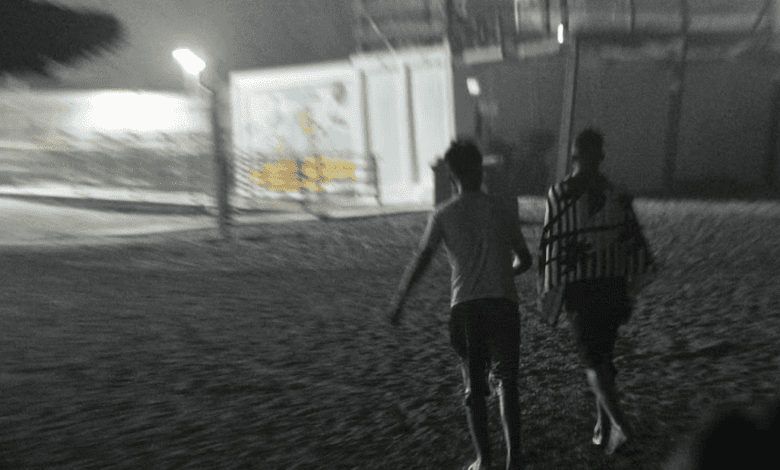
After the rescue, Lorena wrapped the teenager in her jacket to shield him from the biting wind and rain. He kept thanking the woman, repeating, “Thank you, señora.” Yet even on land, the boy could not calm down—he was worried about a friend who, he said, was also trying to swim across the border. He rushed along the beach searching for his companion, while Lorena and her colleagues had to return to work.
A day has passed since then, but the woman still doesn’t know what happened to the teenager and his friend. The uncertainty troubles her. She hopes the boy made it to safety, but there is no certainty.
System at its limit
In recent days, more than thirty minors have reached Ceuta by swimming. When the sea is rough, Morocco’s patrol boats stay ashore, and teenagers risk the perilous journey. City services cannot always respond in time, and the system for receiving minors has long been stretched to its limits: with an official capacity of 132, more than four hundred children are currently in shelters.
Age verification and medical examinations can take weeks. During this time, the fate of many remains unknown. This time, rescue was made possible only thanks to the quick reaction and courage of ordinary people who happened to be in the right place at the right time.
A Trial for the City
The story of Lorena Becerra is more than just a tale of heroism. It’s a reminder that behind cold statistical numbers are real lives and destinies. Each new storm brings fresh challenges for the city, its residents, and those seeking refuge here. While some risk everything for a better life, others—risking themselves for strangers—perform acts that are impossible to forget.