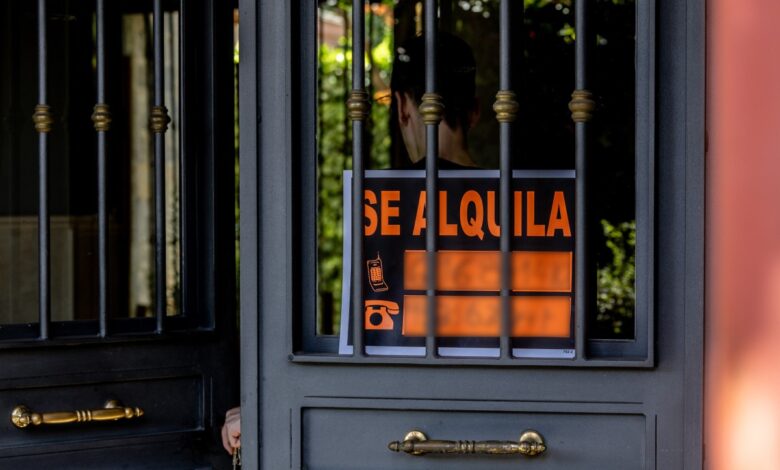
A new wave of debate over housing affordability is heating up in Spain. The Organization for Economic Cooperation and Development (OECD) has criticized the government’s methods for tackling the shortage of affordable housing in its latest report. Experts warn that unless there is a large-scale expansion of social housing and a rethink of incentives for landlords, the problem will only get worse. Meanwhile, attempts to cap rent increases and tax empty apartments, according to analysts, have failed to deliver the desired results and may even harm the market.
According to OECD estimates, Spain is facing a severe housing shortage, particularly in the rental sector. In recent years, demand for apartments in major cities and tourist hotspots has soared, leaving supply struggling to keep up. Banking analysts estimate a shortfall of 600,000 housing units between 2022 and 2025. The reasons include migration, a growing number of households, and population concentration in metropolitan areas and popular resorts.
As a result, renting has become unattainable for many families, especially those with low incomes. While most Spaniards still prefer homeownership, the proportion of renters has risen significantly since 2015. The number of tenants is growing especially fast among young people and foreigners.
Social housing: why is Spain falling behind?
The OECD notes that social housing in Spain accounts for just 3% of the total housing stock. This is one of the lowest rates in Europe and among OECD countries. As a result, the risk of falling below the poverty line due to housing costs in Spain is higher than in most eurozone countries.
The reasons lie not only in the limited land available for development, but also in the declining efficiency of the construction sector. Over the past decade, productivity in construction has fallen, and investments in new projects are held back by high land prices, costly materials, and constant changes in legislation. All this makes the market unpredictable for investors.
Authorities have tried to respond: they launched fast-track construction programs, reformed land and urban development laws, and promised to increase the volume of social housing. However, according to the OECD, these measures are not enough. To match the European average, Spain needs to build or convert another 1.5 million rental apartments, with over 850,000 required in the next four years.
Rent caps: The effect is the opposite of what was expected
In recent years, the Spanish government has actively introduced measures to curb rising rental prices. In 2023, a law was passed that capped prices in ‘problem’ areas, expanded the pool of subsidy recipients, and strengthened tenant protections. However, the OECD warns that such steps, without increasing supply, could lead to a decrease in the number of available apartments.
The case of Barcelona, where rental rates were frozen in 2020, showed that some owners simply withdrew their properties from the market or switched to short-term rentals for tourists. As a result, there were even fewer available apartments, and prices for the remaining offerings continued to rise.
Experts insist that a comprehensive strategy is needed to simultaneously boost supply and address growing demand. Special attention should be given to coordination among central, regional, and municipal authorities to avoid fragmented approaches.
Empty apartments and taxes: tough decisions
The question of how to use millions of vacant apartments remains pressing. Spain has about 3.8 million such properties, but most are located in regions with minimal demand. The OECD notes that imposing taxes on vacant housing is a controversial measure that’s difficult to implement. Portugal’s experience shows that such initiatives often stall due to challenges in identifying the status of apartments and administering the tax.
The organization advises Spain to clearly define the criteria for ‘vacant housing’ and implement a progressive tax scale based on how long the property has been unused and its location. This would allow municipalities to respond flexibly to local market challenges. Utility consumption data and property registry information could be used for accurate tracking.
Subsidies and tenant support: What’s the problem?
While social housing is being built slowly, subsidies remain the only lifeline for many families. However, Spain’s system of tenant support is fragmented: programs are developed at the regional level, funding is limited, and eligibility criteria often don’t match real needs.
The OECD recommends combining fragmented initiatives into a single national program that would take into account regional income levels and actual rental prices. According to experts, this approach could reduce inequality and make the market fairer.
Overall, analysts are convinced: Without large-scale reforms and long-term investment, Spain risks facing an even more severe housing crisis in the coming years.
By the way, what is the OECD and why does its opinion matter?
For reference, the Organisation for Economic Co-operation and Development (OECD) is an international body comprising 38 of the world’s most developed countries. Founded in 1961, the OECD has since become one of the leading think tanks on issues related to the economy, education, social policy, and innovation. Its members include countries such as the United States, Germany, France, Japan, Canada, and, of course, Spain. The organisation regularly publishes reports and recommendations that are taken into account when shaping national strategies. The OECD not only analyzes economic trends, but also develops standards to improve quality of life, promote sustainable development, and tackle inequality. In Spain, both the government and business circles have traditionally paid close attention to the organisation’s conclusions. That is why the latest OECD report has sparked such a lively debate among experts and officials.