Sweeping Changes on the Coast: Satellites Capture the Transformation
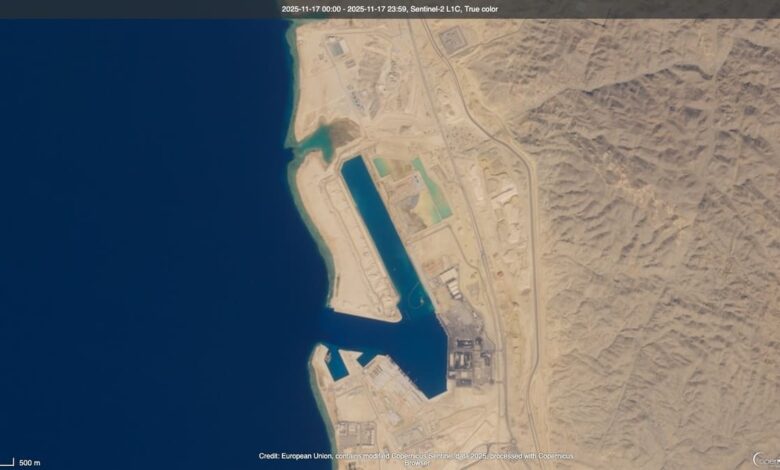
A massive construction site has emerged in the southwest of Saudi Arabia—so large it can now be seen from space. Satellite images clearly reveal the outlines of the future Oxagon megacity, one of the most ambitious projects of our time. This port city, according to the initiators’ plans, is set to become the world’s largest floating urban center, surpassing even such metropolises as New York in size.
The construction site covers a vast area along the Red Sea coast. Even now, the main elements of the future infrastructure are visible: docking lines, platforms for equipment installation, and the first buildings that will eventually shape this unique urban landscape. Work continues around the clock, with building speeds impressing even seasoned industry experts.
A Next-Generation Logistics Giant
Oxagon is designed to become a key transport hub, with the capacity to handle up to 12 million TEU—standard containers used to measure cargo traffic. For comparison, all Russian seaports handled less than half that amount last year. This scale represents a new level of logistics that could shift the balance of power in global trade.
A key feature of the project will be the introduction of intelligent management systems. Artificial intelligence and a fully autonomous fleet will optimize every process: from cargo distribution to the operation of the railway network, which will be integrated directly into the port infrastructure. This will minimize human error and increase operational efficiency.
Environmental Standards and Digital Transformation
The creators of Oxagon are betting on sustainability and environmental responsibility. The city will feature solar and wind power plants, supplying energy not only to the port but also to all surrounding facilities. Special attention is being given to constructing a modern data center, which will become the heart of the metropolis’s digital infrastructure.
The implementation of renewable energy sources and advanced data processing technologies will reduce carbon emissions and set the city as an example for other countries aspiring to a ‘green’ economy. Oxagon is positioned as a flagship of sustainable development and digital transformation in the region.
Architectural Solutions and Innovations
The city’s port architectural concept stands out for its boldness and originality. The planners have provided not only functional areas for cargo handling, but also residential neighborhoods, public spaces, and facilities for scientific research and startups. All infrastructure will be integrated into a single digital ecosystem, ensuring a high level of comfort and safety for residents and workers.
Special attention is given to resilience against climate change and potential natural disasters. The use of innovative building materials and technologies will minimize risks and ensure the long-term operation of all facilities.
Global significance and development prospects
Oxagon is already drawing the attention of investors and experts from around the world. Implementing such a large-scale project could transform not only the economy of Saudi Arabia, but also impact global logistics networks. In the long term, the city may become a model for similar hubs in other countries facing the challenge of developing port infrastructure and adopting clean technologies.
As construction nears completion, an influx of new residents, specialists, and companies is expected—those seeking out the innovative solutions and opportunities Oxagon offers. The port city will become not only a transport hub, but also a center for the development of science, technology, and business.
If you weren’t aware, the Oxagon project is being developed as part of the ambitious NEOM initiative, supported by the Saudi Arabian government. NEOM is more than just a new city—it’s an entire region focused on integrating cutting-edge technologies, advancing sustainable energy, and creating a comfortable environment for living and working. NEOM was established in 2017 and has since become a symbol of the kingdom’s innovation and ambition. The NEOM plan includes not only Oxagon but also other unique landmarks, such as the linear city The Line and coastal tourism clusters. The company’s leadership is actively engaging international experts and investors to make the region one of the most advanced in the world. NEOM is positioned as the land of the future, where high technology, environmental responsibility, and new living standards come together. The project has already received international recognition at exhibitions and forums, and its progress is closely watched by the global community. In the coming years, NEOM promises to become one of the main drivers of economic growth and innovation in the Middle East.