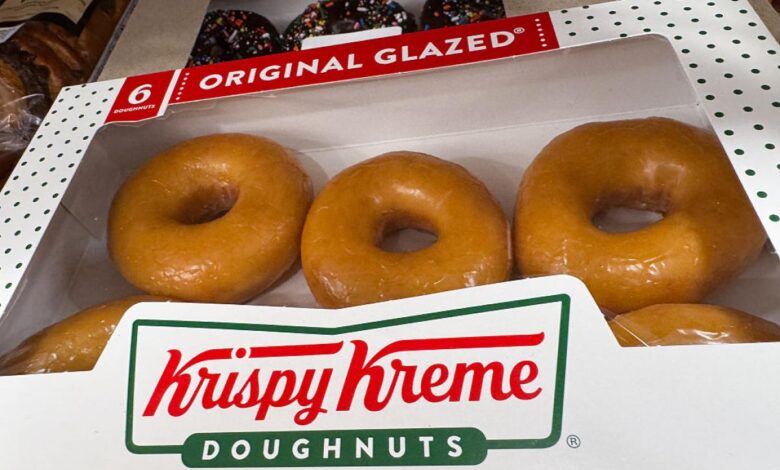
In Spain, claims of record sales always attract special attention, especially when it comes to international brands that have just entered the local market. For residents of Madrid and the entire country, such news prompts reflection on business transparency and the actual scale of demand. When talk turns to a million donuts sold per month, the question of trust in these figures comes to the forefront, as such data can influence the decisions of investors, franchisees, and even the daily habits of consumers.
In recent weeks, the discussion around Krispy Kreme has not subsided. The company, which opened its flagship store in the capital, announced the sale of one million donuts every month. This claim was made in a popular video where a brand representative confidently spoke about the scale of their success. However, the public reaction was far from enthusiastic: social media users and local residents began actively voicing doubts, debating just how realistic such figures are for a single establishment.
Skepticism and calculations
As soon as the news appeared online, heated debates broke out. Many people didn’t hesitate to grab a calculator and figure out that a million donuts a month means roughly 33–35 thousand every day. For a single shop, even if it operates as a major production center, such volumes seem unrealistic. In the comments, users compared this to get-rich-quick advertising promises, and some joked ironically that half the country doesn’t live in the Parquesur area.
Supporters of the brand tried to explain that the shop is not just a retail outlet, but also serves as the main production hub, supplying supermarkets and delivery services throughout the city. However, even these arguments failed to convince most skeptics. During the discussions, some suggested that such loud statements were nothing more than a marketing ploy aimed at attracting new investors and potential franchisees.
Marketing Impact
Spanish social media was ablaze with debate: some were convinced this was a classic tactic to stir up hype around the brand, while others believed the company had actually achieved impressive results thanks to smart logistics and the popularity of their sweets. Most, however, agreed that figures like these demand further proof and greater transparency.
Some users note that such statements may be an attempt to “sell a dream” to those considering opening their own franchise. In the comments, there are sarcastic remarks suggesting that “a million donuts isn’t a business, it’s a miracle,” as well as assumptions that the impressive figures are meant to quickly expand the network by attracting trusting investors.
Market impact
For the Spanish market, public skepticism toward such claims may have long-term consequences. On one hand, impressive numbers can attract attention to the brand and temporarily increase customer flow. On the other hand, if expectations are not met, it could lead to disappointment and decreased loyalty among both customers and potential partners.
With fierce competition in the pastry market and a constant influx of new players, trust in a brand has become a key factor for success. Spaniards are closely watching developments, discussing not only product taste but also business transparency, the honesty of marketing claims, and the actual scale of sales.
Social response
As a result, the discussion around Krispy Kreme in Madrid has gone far beyond just a gastronomic topic. The question of whether it is truly possible to sell such volumes of donuts has sparked a wide-ranging debate about trust in large corporations, the role of marketing, and the importance of critical thinking. New comments, memes, and even mathematical analyses continue to appear on Spanish social media, putting the brand in the spotlight not only among those with a sweet tooth but also everyone following modern business practices.