Spain delivers verdict in high-profile case: 37-year-old Raúl Stancu, known for his far-right views, has been sentenced to one year in prison for organizing a cyberattack on the official website of the Spanish Socialist Workers’ Party (PSOE). The incident occurred amid mass protests outside the party’s headquarters on Ferraz Street in Madrid, as the country was roiled by agreements between the socialists and separatist forces that allowed Pedro Sánchez to remain in power. The court also ordered Stancu to pay €40,376.75 in compensation to cover the damages caused by the attack.
The story began in autumn 2023, when political tensions in Spain reached their peak. In November, during intense protests, Stancu used his page on the social network X (formerly Twitter) to urge supporters to attack the PSOE’s website. He went beyond just words—his posts included a link to a special script that enabled users to bombard the party’s website with mass requests, effectively disabling it.
The court proceedings revealed that Stanku’s actions were not spontaneous but carefully planned. He created the OpStopEurabia account, presenting himself as a campaigner against the spread of Islam in Spain and Europe. Using this profile, he began to coordinate the attack, calling for a ‘protest against the government’ through digital tools. As a result, the PSOE website was blocked for several hours, and the technical team had to urgently suspend its operation to prevent further damage.
Digital protest
That same evening, as the attack was just beginning, messages surfaced online stating that the party’s servers were overloaded. Stanku made no secret of his delight: he publicly boasted about the success, urged ‘patriots’ to join in, and shared the attack tool. His posts were accompanied by hashtags condemning the amnesty and accusing Sánchez of betrayal.
But the story didn’t end there. A hacker group called Team HDP, based in the US and reportedly made up of Venezuelan expatriates, joined the attack according to the court. They picked up on Stanku’s call, amplifying the impact. As a result, the PSOE website was unavailable to users for several hours, and the damage proved significant.
Meanwhile, another X user published the personal details of 53 socialist party members from the city of El Rosario (Tenerife). This added fuel to the scandal and sparked outrage among politicians and the public.
Courtroom drama
At the trial, PSOE representatives demanded a five-year sentence for Stanku, while the prosecution insisted on three years. However, the judges concluded that although his actions were ideologically motivated, this did not constitute the aggravating circumstance of ‘ideological hatred,’ since the party is not considered a vulnerable group. Nevertheless, the court found a direct link between Stanku’s actions and the consequences of the attack, as well as his key role in organizing the crime.
The defense tried to persuade the court that Stanku’s role was minor and his actions were merely an expression of protest. The lawyer requested the sentence be reduced to six months with community service instead, and the compensation amount be lowered to €3,300. However, the judges rejected these arguments, stressing that it was Stanku who initiated the attack and provided the necessary tools to carry it out.
The court’s decision noted that restoring the website and addressing the aftermath of the attack cost the party tens of thousands of euros. The judges emphasized a direct causal link between the defendant’s actions and the resulting consequences. This became the key argument in delivering a guilty verdict.
Political background
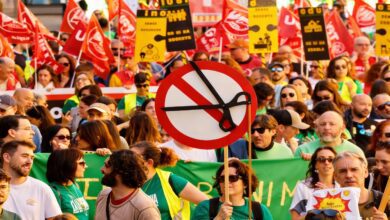
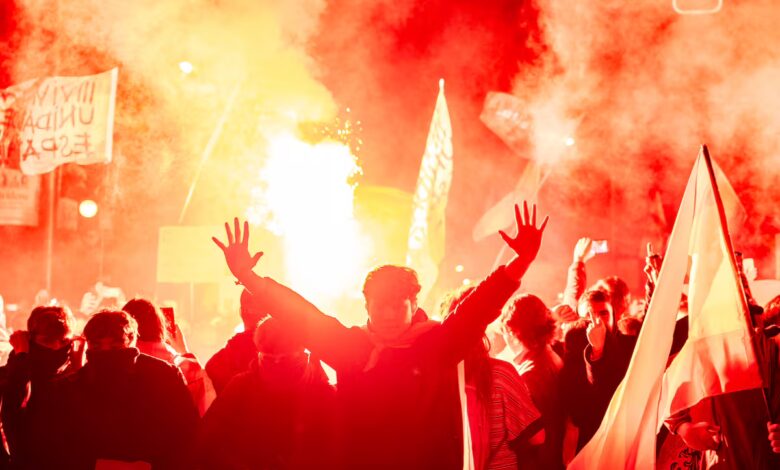
All this unfolded against the backdrop of heated protests organized by far-right groups and backed by a number of political forces, including the Vox party. Demonstrations near PSOE headquarters escalated into clashes with police, who used tear gas and made arrests. During this period, digital attacks emerged as a new means of pressure on political opponents.
Stancu, a native of Romania and resident of the province of Girona, was connected to far-right organizations and openly shared his views. In court, he admitted that he acted solely against PSOE, targeting the party because of its political stance. Representatives of the Socialists insisted the attack was directed specifically at them, and not at other political forces.
The court’s decision sparked considerable debate across Spanish society. Some consider the sentence too lenient, while others see it as overly harsh. One thing is clear: digital attacks are becoming an increasingly dangerous weapon in political battles, and those responsible now face consequences not only online but in the real world as well.