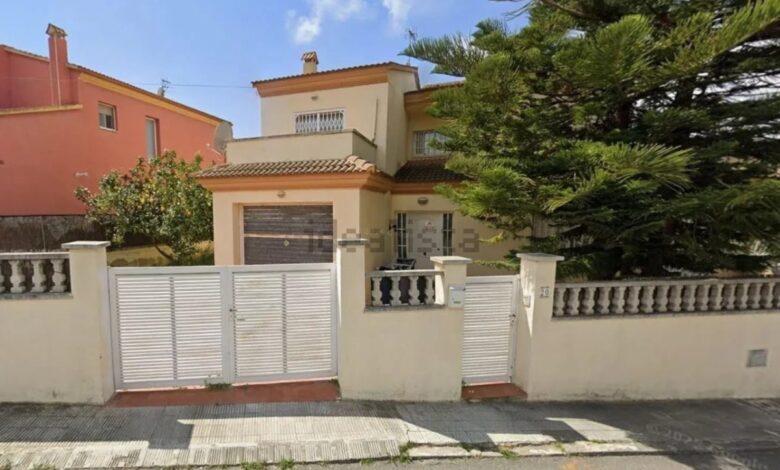
Surge in Occupied Apartments Listed for Sale
In recent months, Spain’s real estate market has seen a noticeable increase in the number of apartments that are illegally occupied while simultaneously being offered for sale. According to data from the third quarter of 2025, there are 23,010 such listings, accounting for about 3% of all properties nationwide. Analysts note that this figure is being recorded for the first time, making it impossible to track trends from previous periods.
Geography: Where the Problem Is Most Severe
Among Spanish cities, Girona has the highest percentage of such apartments—8.9% of all properties for sale. It is followed by Tarragona (8.8%), Sevilla (8.4%), Almería (6.4%), and Murcia (6.3%). In Barcelona, this figure stands at 3.7%, and in Madrid at 2.4%. In some cities, such as Soria, there are no such listings at all, while in León the share is minimal—just 0.2%.
Looking at provinces, Barcelona tops the list, with 7.9% of all apartments for sale in this situation. Next are Sevilla (6.6%), Toledo (5.3%), Huelva (5.1%), and Almería (5.1%). In Madrid, the figure is 2.7%, and in Soria, just 0.1%.
Major Markets and Regional Distribution
In terms of absolute numbers, Barcelona leads the way—in the third quarter of 2025, 855 occupied apartments were listed for sale here. Madrid follows with 776, Sevilla with 558, Murcia with 427, Málaga with 304, Valencia with 200, Palma with 184, and Almería with 158. These eight cities account for 69% of all such listings among provincial capitals. Meanwhile, in Soria, Segovia, Melilla, and Teruel, such apartments are virtually nonexistent.
By province, the highest number of occupied apartments is also recorded in Barcelona — 6,587 properties. Next are Madrid (1,542), Murcia (1,395), Alicante (1,265), Malaga (1,254), Seville (1,222), Girona (1,101), and Tarragona (1,001). In Soria, there is only one such apartment.
Distribution by autonomous communities
Catalonia leads in the number of occupied apartments for sale, accounting for 39% of all such listings in the country. Andalusia ranks second with 22%, followed by the Valencian Community with 11%. The Madrid region holds 7%, and Murcia 6%. In other autonomous communities, the share does not exceed 4%, while in La Rioja and Navarra the figure is statistically insignificant.
Methodology and study limitations
To conduct the analysis, algorithms were used to process ad texts and identify properties undergoing illegal occupation. Currently, it is not possible to assess trends in this phenomenon or analyze pricing and demand. The study was based on a database of listings from across Spain, as well as data from open and closed sources to provide a comprehensive overview of the market situation.