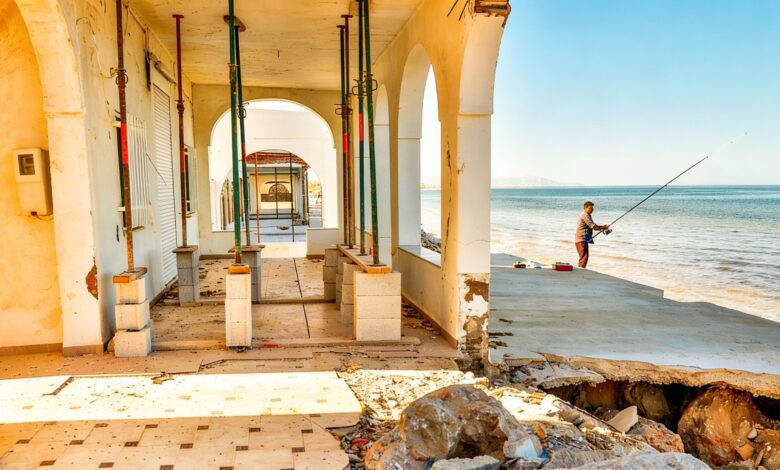
The decision by Spain’s Constitutional Court to suspend certain provisions of Valencia’s coastal law has taken thousands of local residents by surprise. This move directly impacts the fate of traditional seaside homes, which have long been a source of disputes between local authorities and the central government. The question of who will control coastal land is once again at the forefront of public debate.
The court has temporarily blocked articles aimed at protecting historic settlements and sites of ethnographic value along the coast. As El Pais reports, these provisions allowed for the preservation of old houses and villages, some dating back to the first half of the 20th century, even in the face of federal requirements to redraw the boundaries of coastal zones. Most of these properties were originally built under old permits and now risk being declared illegal.
The Spanish government filed a lawsuit against the law, arguing that it contradicts key national regulations and could violate constitutional standards. Specifically, the case centers on the potential disruption of the balance of powers and the inadmissibility of arbitrary decisions by public authorities. The temporary suspension of the law took effect for the parties involved as soon as the lawsuit was filed, and for third parties from the moment it is published in the official bulletin.
Political divisions
The Valencia Coastal Law was adopted in May 2025 with the support of the Partido Popular (PP) and Vox parliamentary groups. The document was drafted on an accelerated schedule and provoked sharp criticism from the opposition, particularly PSPV and Compromís. Opponents argued that the law reduces the level of coastal protection compared to previous plans such as Pativel and makes concessions to the interests of specific groups of property owners.
The law included measures to compensate property owners whose assets fall within the new coastal boundaries, as well as attempts to balance the preservation of historical sites with regional economic development. One of the key changes was the possibility of reducing the zone for commercial construction from 500 to 200 meters from the shore, a measure already regulated by the current law on administrative simplification in Valencia.
During the parliamentary discussion of the document, 17 amendments from Vox were accepted, none of which originated from the opposition. Partido Popular representatives emphasized that the new law protects not only the region’s natural environment, but also its historical, tourist, and economic heritage. Special attention was given to safeguarding villages of ethnographic value, such as Torre la Sal (Cabanes), Tavernes, Guardamar, and Dénia.
Legal specifics
The status of traditional coastal settlements remains a key issue in the dispute between Madrid and Valencia. The central government insists on enforcing nationwide standards, while regional authorities aim to preserve unique sites and offer guarantees to property owners. A bilateral commission was established to seek a compromise, successfully agreeing on most disputed articles except those concerning the protection of ethnographic settlements.
Among the suspended provisions are Article 17, the first final article of the law, and an additional requirement to create an up-to-date register of coastal lands that have lost their natural characteristics. According to the government, these rules could conflict with federal law and set a precedent for other regions.
Tax and property rights issues in Spain have repeatedly been the subject of court proceedings. For example, a recent Supreme Court decision regarding the taxation of the PSC headquarters in Barcelona attracted wide attention and illustrated how courts can influence property relations between the state and private parties. More details can be found in the article on legal disputes over real estate taxes.
Context and consequences
The situation with the coastal law in Valencia reflects a broader trend in Spain, where the issue of regulating coastal areas is becoming increasingly pressing. In recent years, various regions across the country have attempted to review the boundaries of coastal zones, consistently sparking protests from local residents and property owners. In some instances, this has led to mass lawsuits and protracted negotiations between regional and central authorities.
According to El Pais, similar disputes have arisen in other autonomous communities, where local parliaments have tried to adapt federal regulations to suit their needs. However, intervention by the Constitutional Court has often played a decisive role in determining the future of contested laws. As a result, issues such as property rights, preservation of historic sites, and the development of coastal economies remain at the forefront of public attention.
In recent years, Spain has faced several high-profile cases related to property regulations and the protection of historic settlements. For example, in Andalusia and Catalonia, initiatives to change the status of coastal homes have been repeatedly debated, leading to new legal proceedings and adjustments in legislation. These events show that balancing the interests of the state, regions, and individuals remains a complex task for the Spanish legal system.