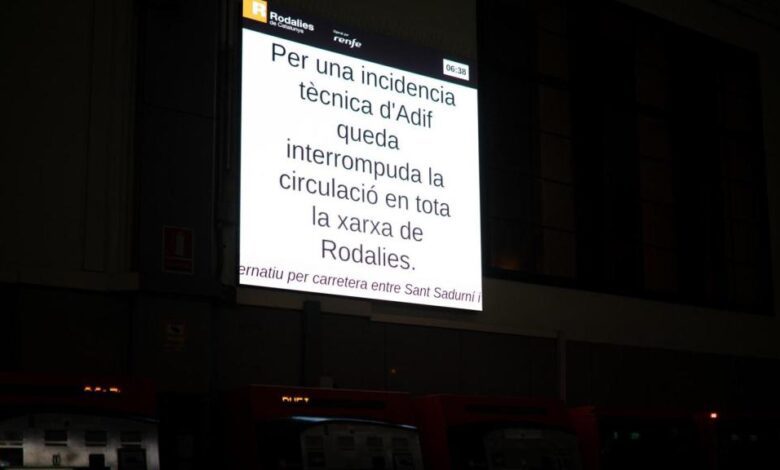
Residents of Barcelona and its suburbs found themselves at the center of transport chaos today. From early morning, thousands of Rodalies passengers faced an unexpected halt in train service. A sudden failure paralyzed key routes, sparking a wave of frustration and confusion across the city. Long lines formed at stations, with people trying to find out when they could get to work or home, but no one had clear answers.
The large-scale disruption was caused by a mysterious malfunction at the Adif railway operations center, located at the famous Estación de Francia. According to representatives of the railway company, the breakdown happened here and, within minutes, brought the entire Rodalies system to a standstill. Engineers and dispatchers scrambled to regain control, but the situation remained unstable.
Forced measures
While railway workers struggled with the technical issues, Catalan authorities were forced to take emergency action. An urgent decision was made to increase the number of intercity buses to at least partially offset the transportation collapse. Bus operators were instructed to add more trips, but even that proved insufficient — the passenger flow was simply too great.
Many Barcelona residents found themselves needing to look for alternative ways to get around for the first time in a long while. Taxis, car-sharing services, and even bicycles saw soaring demand. Heated debates erupted on social media: some blamed railway workers for negligence, while others criticized the authorities’ lack of preparedness for such emergencies.
Unpredictable disruptions
Despite attempts to restore service, Rodalies trains were unable to return to their usual schedule. After a brief resumption of operations in the morning, the system failed again, and service was suspended for a second time. Passengers already en route were forced to leave the trains and look for alternative ways to reach their destinations.
Officials were in no rush to offer optimistic forecasts. Representatives of the railway company admitted that disruptions could continue throughout the day, and the situation remained uncertain. Many passengers complained about a lack of information and confusion at the stations, where staff could not provide clear answers about when service would be restored.
A city on hold
Barcelona and its suburbs found themselves in a state of transport stress. People were late for work, school, and important appointments. In some areas, traffic jams developed due to an increased number of cars and buses. Authorities urged residents to stay calm and avoid travel if possible, but for many this was not an option.
While Adif engineers continue to search for the cause of the breakdown, city residents are debating on social media who will be held accountable for what happened. Some are demanding resignations, others want compensation for disrupted plans and lost time. There’s an air of uncertainty: no one knows whether a similar situation might happen again tomorrow or even later today.
Consequences for everyone
This morning’s events put Barcelona’s transportation system to a real test. Questions about the reliability of Rodalies and the readiness to handle emergencies are once again front and center. Passengers, accustomed to stable train service, are now considering backup options in case of new disruptions.
While some are trying to reach their destinations, others are closely following the news, hoping for a quick return to normal life. But even if train service is fully restored, the uneasy feeling from this morning will stay with many for a long time.