Sunday evening in Andalusia turned into a catastrophe no one saw coming. Two passenger trains collided on the tracks near Adamuz in the province of Córdoba. Dozens of people have been confirmed dead and the number of injured has exceeded one hundred. Some victims remain in critical condition. National and regional authorities were forced to urgently cancel all public events and focus on dealing with the aftermath of the tragedy.
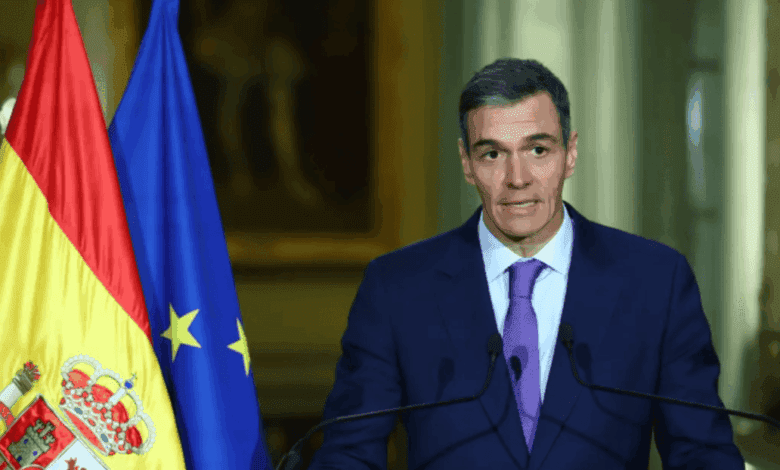
Prime Minister Pedro Sánchez immediately canceled all scheduled meetings, including talks with Bill Gates and opposition leader Alberto Núñez Feijóo. On social media, he expressed his concern and promised that the government would do everything possible to support the victims. The opposition leader also publicly backed the decision to postpone meetings, emphasizing that saving lives and supporting the victims’ families is now the top priority.
Timeline of the Disaster
According to official reports, the accident occurred around 7:45 pm. An Iryo train traveling from Málaga to Madrid derailed as it entered Adamuz station. At that moment, another train—Alvia—was moving along the adjacent track, heading from Madrid to Huelva. The collision caused severe damage to both trains, with the front carriages of the Alvia train literally flying off the embankment and plummeting from a height of four meters.
Hundreds of passengers were on the trains. The Alvia had about 56 people in the first two carriages, which took the brunt of the impact. Most of the fatalities and serious injuries occurred there. Preliminary reports indicate that the Iryo had 317 people on board. The victims include the Alvia’s driver and several passengers from both trains. The scene resembled a disaster movie: twisted carriages, cries of the injured, smoke and chaos.
Экстренные меры
All available resources were mobilized at the scene: firefighters, medics, police, and military rescuers from the Unidad Militar de Emergencias (UME). The authorities in Andalucía immediately raised the civil protection alert to its highest level, and a command center was set up in Córdoba. Hotlines were opened for relatives and victims, allowing people to get information about their loved ones.
Minister of Transport Óscar Puente called the incident ‘inexplicable’ from a technical standpoint. According to him, the section of track had recently been renovated, and both trains were modern and fully operational. The work on the line had finished just a few months ago, with hundreds of millions of euros invested. Nevertheless, the collision occurred on a straight stretch where nothing seemed to foreshadow a disaster.
Nationwide reaction
All of Spain is holding its breath, waiting for news from Córdoba. Thousands are expressing condolences and support for the families of the victims on social media. National and regional leaders have canceled public events, as politicians at all levels call for unity and solidarity. Authorities in neighboring autonomous communities have offered assistance to Andalucía to speed up rescue operations and support those affected.
Dozens of injured have been taken to hospitals in Córdoba and nearby towns, many in serious condition. Medical staff are stretched to the limit, while volunteers and local residents are bringing water, food, and blankets to those anxiously waiting for news about loved ones. There is a sense of unease in the air: the death toll could rise, as not all passengers have been found beneath the wreckage.
Investigation and unanswered questions
The cause of the tragedy remains a mystery for now. The railroad accident investigation commission (Comisión de Investigación de Accidentes Ferroviarios, CIAF) has already begun its work. Experts are not ruling out either technical failure or human error. The Minister of Transport emphasized that the investigation will be thorough and transparent, with results expected in no less than a month.
For now, the nation demands answers: how could such a disaster occur on a modernized line with state-of-the-art trains? Why did the safety systems not work? And could the tragedy have been prevented? These questions are growing ever louder, and the public wants not only explanations but also guarantees that such an incident will not happen again.