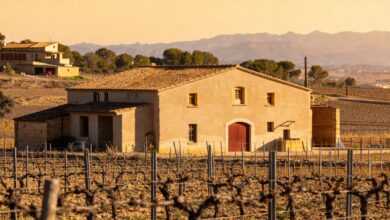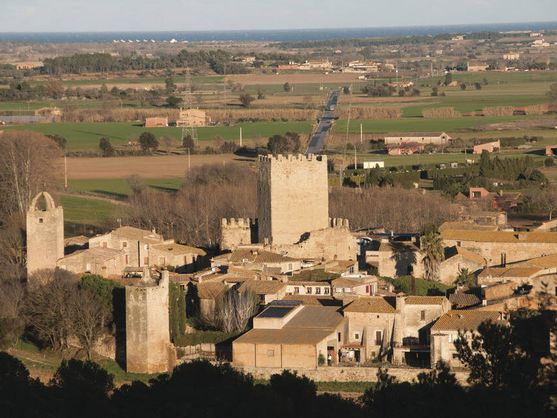
In the heart of the Baix Empordà region, between the Costa Brava coastline and the inland areas of Catalonia, lies Peratallada—a place where time seems to stand still. Narrow, stone-paved streets and ivy-clad walls make you feel as if you’ve stepped onto the set of a historical film. Here, every house and every alleyway bears the marks of centuries.
The town’s name is linked to the stone from which its historic center is built. Even after centuries, Peratallada has preserved its feudal character. At its center rises an 11th-century castle, perched atop a rocky hill and still surrounded by a deep moat. The tower, ancient fortress walls, and the Romanesque church of Sant Esteve are a reminder that here, history is not just a memory but a living part of the present.
As you stroll through these streets, it’s impossible not to notice how the house facades are adorned with bougainvillea and ivy. Squares such as Plaça de les Voltes with its arcades, Plaça del Oli, and Plaça dels Esquiladors invite you to linger in the shade or browse the shops offering local delicacies. The entire old town seems made for leisurely walks, where you can forget about time and simply enjoy the atmosphere.
Despite its modest size, life here is vibrant. In early October, Peratallada transforms into the stage for a medieval fair: jugglers, musicians, and merchants fill the streets with festivity. In August, a major celebration takes place with a communal dinner on the main square, bringing together locals and visitors. These events let you feel like a participant in history, not just an observer.
Travelers will find everything they need here: cozy inns, country houses, small hotels, as well as bars, restaurants, and shops offering artisan goods. Peratallada is ideal for both a short visit and a full weekend getaway. Here, it’s easy to find a balance between culture, history, and tranquility.
Part of the municipality of Forallac, Peratallada is considered one of Spain’s best-preserved medieval villages and has been designated a national cultural heritage site. Its uniqueness lies in the fact that it’s not just an open-air museum, but a living town where you can not only observe but truly experience: wander the squares, listen to music at the fair, and watch as the sunset bathes the stone walls in golden hues.