A new conflict is brewing in Spain over the role of the church in politics. Pope Leo XIV, during a meeting with Spanish bishops, voiced his concern about the activity of far-right forces, which he believes are trying to use the church to gain electoral support. The Pope’s position came as a surprise to many believers and politicians, as it raises questions about possible influence on the country’s future and its democratic foundations.
The reaction from the Vox party, which is often linked to far-right views, was restrained. At a press conference in Madrid, the party’s secretary general, Ignacio Garriga, questioned the authenticity of the Pope’s statements, claiming the information came from journalists rather than the pontiff himself. Nevertheless, Garriga admitted that the Pope’s view of the party is far from positive, but sought to emphasize that Vox stands for social justice and the protection of life. However, he sidestepped the issue of supporting the migration reform endorsed by both the church and the government.
Politics and the church
Migration has become one of the main points of contention. In January, the Spanish government approved a plan to legalize hundreds of thousands of migrants, a move supported by the Catholic Church. Vox leader Santiago Abascal openly expressed his dissatisfaction with this decision, accusing some bishops of allegedly benefiting from migration policy. Even so, party representatives avoid direct criticism of the Pope, preferring instead to blame the media for fueling the conflict.
Deputy Prime Minister and Minister of Finance María Jesús Montero called the Pope’s statement timely and stressed that support for the far right could threaten democracy. She noted that the pontiff’s words provide Catholics with guidance, while far-right groups pose risks to society’s freedoms and well-being. According to El Pais, these remarks sparked a strong reaction among politicians and believers.
Meeting in the Vatican
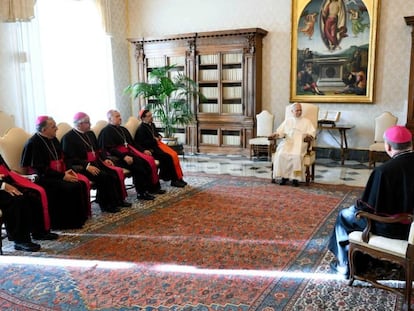
In November last year, a delegation of nine Spanish bishops met Pope Leon XIV in the Vatican for the first time. After a speech by the head of the episcopate, Archbishop Luis Argüello, the Pope immediately outlined his main concern: the growing influence of far-right ideas in Spain. According to El Pais, the pontiff believes that such groups exploit religious sentiment to pursue political goals, particularly on issues of migration and social policy.
In their statements, representatives of ultraconservative groups accuse the bishops of betraying the faithful and supporting the government’s ‘anti-Christian’ initiatives. Some even claim that the church is making concessions to resolve scandals involving pedophilia or to secure financial backing.
Public reaction
Pope Leon XIV also addressed the issue of investigating cases of violence within the Church and recommended that bishops reach an agreement with the government to support victims. Shortly after, a compensation agreement for victims was signed under state supervision. Later, the bishops supported a migrant legalization plan, provoking sharp criticism from Vox and ultracatholic organizations.
Following these events, the rhetoric of the far right grew even harsher. Offensive posts appeared on social media, and some radical groups circulated AI-generated videos portraying the head of the episcopate in a demonic image. Such actions only heightened tensions between the Church, politicians, and society.
In recent years, Spain has repeatedly faced attempts by political forces to influence the Church and use religious issues to mobilize voters. In 2024, a similar conflict arose around the migrant rights law, when the Church supported the reform despite the stance of several parties. At that time, there were also accusations against the bishops and attempts to discredit their decisions. These situations highlight how acute the balance between religion and politics is in the country and how quickly public debate can turn into open confrontation.