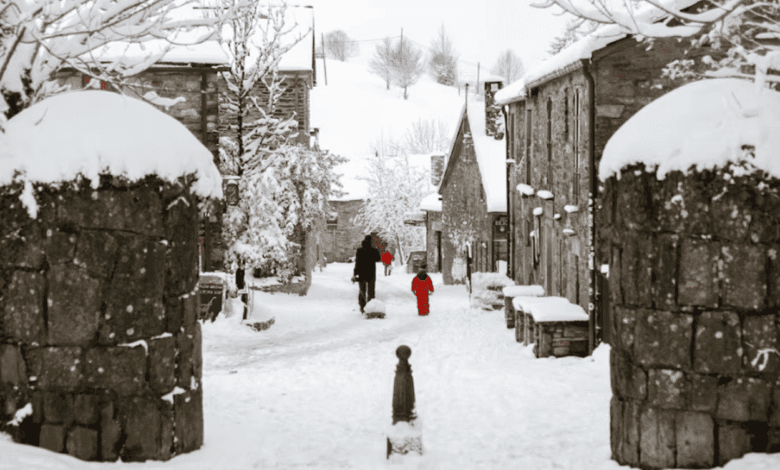
As 2026 begins, residents of Spain will face a true test for umbrellas and winter clothing. Starting January 1, a powerful Atlantic storm named Francis is set to hit the country. Meteorologists warn that weather conditions will change rapidly, and the consequences could be significant for many regions.
It’s difficult to predict how severe the situation will become, but it’s already clear that heavy rain and thunderstorms will affect much of the country. The heaviest precipitation is expected in the west of the peninsula and around the Canary Islands. Some areas may even see snowfall—not only in the mountains, but also at lower altitudes, which is rare for Spain at this time of year.
Storm Francis
According to preliminary forecasts, Francis will bring not only rain but also a sharp drop in temperature. In the first days of January, cold continental air will move into the north of the country, possibly causing snow in the Cantabrian Mountains and inland areas. Temperatures in most regions will rise slightly at first, but a noticeable decrease is expected, especially by the end of the first week of the year.
The most intense rainfall is expected in the Bay of Cádiz area and the Canary Islands. On Saturday, January 3, snowfall is possible at low altitudes in the northern provinces. Meanwhile, in the south and east of the country, rain may be accompanied by thunderstorms and, in some places, strong winds.
Weather contrasts
The situation is complicated by a powerful anticyclone developing over the Atlantic, which will block the movement of weather fronts. This will allow cold air masses from the Arctic and Eastern Europe to enter Spain. When these cold flows collide with the warmer, wetter air brought by Francis, it could trigger sharp temperature drops and heavy precipitation.
From Sunday until January 6, when Spain celebrates Día de Reyes, the cyclone will weaken and move toward the Mediterranean. However, this is precisely when polar air is expected to arrive, bringing a sharp drop in temperatures and fresh snowfall, especially in central and northern regions. In some areas, snow may even fall on the plains, taking local residents by surprise.
Unpredictable weather forecast
Meteorologists say long-range forecasts are especially uncertain in this scenario. It all depends on where the cold and warm air masses meet. If it happens in the north, snow will fall in its usual regions. But if the fronts clash closer to central or southern Spain, the country could see widespread snow and heavy rains in areas unaccustomed to such weather.
Weather models remain inconclusive, but one thing is clear: early 2026 will bring unstable and at times extreme conditions. Residents are advised to watch for updated forecasts and be ready for sudden changes.
Remembering Filomena
Memories of January 2021, when Filomena paralyzed Madrid and other regions, are resurfacing in society. However, experts emphasize that the current situation is different in several important ways. While both storms share a similar timeframe and a name starting with the letter ‘F,’ there are no direct parallels to be drawn between them.
Nevertheless, Spaniards are watching developments with concern, as weather surprises early in the year can impact transport, emergency services, and even festive events. All that remains is to wait and hope the weather won’t bring any unpleasant surprises.