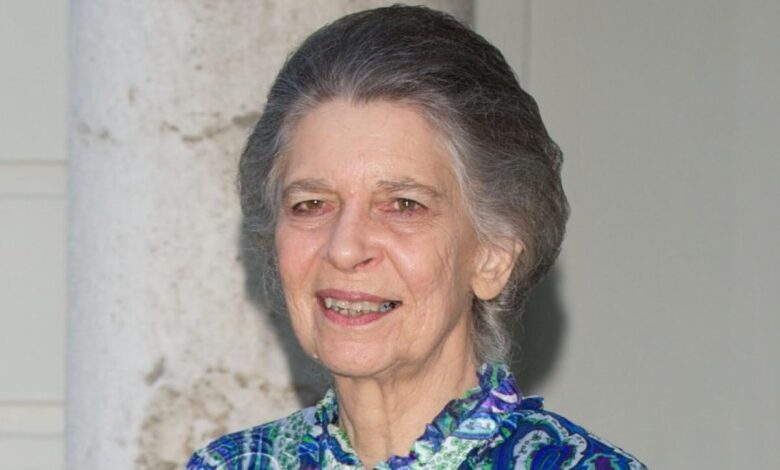
In January 2026, the life of Princess Irina of Greece (Irene de Grecia) came to an end in Madrid. Her passing was not unexpected for her loved ones: in recent years, the health of Queen Sofía’s (Sofía) sister had noticeably deteriorated. In the last months, she hardly ever left the walls of La Zarzuela palace (La Zarzuela), where she had spent most of her adult life. Although her name seldom made the news, Irina remained an integral part of the Spanish royal family, and her bond with her sister was truly unique.
As the years went by, Irina appeared in public more and more often alongside Sofía. They were seen together at official events, family gatherings, and even spending summer holidays in Mallorca (Mallorca). The sisters were inseparable despite differences in age and personality. Sofía was always energetic and healthy, while Irina was known for her restraint and delicacy. But it was this quiet support that made her indispensable to the queen.
The final years
2023 was a real test for the Greek family. In January, Constantine II (Constantino II), the last King of the Hellenes and Irina’s brother, passed away. His death was a blow to the entire family, and for Irina it marked the beginning of a rapid decline in her health. Even then, she began to show signs of cognitive impairment that became increasingly apparent each month. Her memory failed her, moments of confusion appeared, and moving around without help became impossible.
Despite this, Irina remained involved in her family’s life. She continued to accompany Sofía to important events, visited Mallorca, and even traveled to Greece. In 2023, she made her last public appearances at the BMW Painting Award ceremony and at a charity concert held by the foundation ‘Mundo en Armonía’, which she herself had founded. After that, her appearances in public became increasingly rare.
Journeys and Farewells
In 2024, the princess’s health deteriorated to the point where she could no longer manage without a wheelchair. Nevertheless, she found the strength to travel to Greece for the funeral of her cousin Miguel (Miguel de Grecia) and to spend the summer with her family in Mallorca. That autumn, Irina visited Athens (Atenas) to attend the wedding of her niece Theodora (Theodora de Grecia) to Matthew Kumar, although she was unable to attend the religious ceremony.
In February 2025, despite her fragile health, Irina set off for Athens once more—this time for the wedding of her nephew and godson Nicolás (Nicolás de Grecia) to Chrysi Vardinogiannis. In photos from that day, she appeared tired, but Sofía and Infanta Cristina (Cristina) were at her side. After that summer, she no longer left La Zarzuela, and Sofía hardly left her sister’s side, even foregoing the family’s traditional vacation in Mallorca.
Roots and Exile
Irina’s story is one of exile and return. She was born in May 1942 in Cape Town (Ciudad del Cabo, South Africa), at a time when her family was forced to leave Greece due to the Nazi occupation. Her parents, Pablo I de Grecia and Federica de Grecia, were then the heirs to the throne. After the war, the family returned home, and in 1947, Pablo became king.
Irina was the youngest of three children: her elder sister Sofia was born in 1938, and her brother Constantinos in 1940. Their childhood was marked by constant anxiety and displacement. Despite these challenges, Irina received an excellent education and from a young age was known for her modesty and passion for the arts. Though her life rarely drew public attention compared to her more prominent relatives, it was precisely her quiet presence that made her a pillar of support for her family.
Connections and Traditions
Irina of Greece was closely related to most European royal houses. Her life story is a striking example of how personal destinies can intertwine with the fate of entire nations. She was never a public figure nor sought fame, yet her contribution to charity and her unwavering family support is immeasurable. In recent years, she came to symbolize resilience and devotion despite all adversities.
Irina’s death marks not only the passing of a member of old European aristocracy, but also the end of an entire era. Her life is a reminder that behind the façade of royal palaces lie true human dramas, loyalty, and love that stand the test of time.