Sunday evening in Andalusia turned into a catastrophe that Spain will remember for a long time. On a stretch of railway near Adamuz in the province of Córdoba, two high-speed trains found themselves in a deadly trap. The collision claimed at least 39 lives, and the number of injured has surpassed fifty. Among the wounded, 25 are in serious condition. The events unfolded rapidly, leaving behind chaos, fear, and many unanswered questions.
One of the trains, traveling from Málaga to Madrid’s Puerta de Atocha, suddenly derailed and moved onto an adjacent track. At that moment, another train – the Alvia, heading from Madrid to Huelva – was approaching on the opposite line. The collision was unavoidable. The force of the impact was so great that the first carriages of the Alvia were literally thrown off a four-meter embankment. Most of the fatalities and severely injured were in these cars.
Service paralyzed
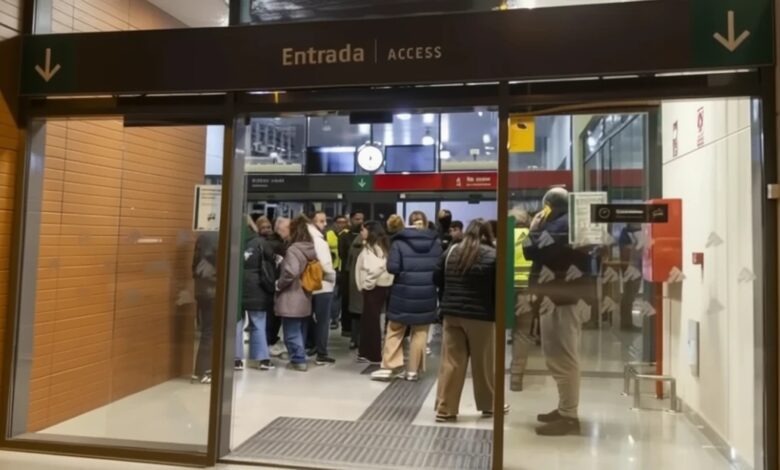
As a result of the accident, rail service between Madrid and key Andalusian cities – Sevilla, Córdoba, Málaga, and Huelva – has been completely halted. Over two hundred departures have been canceled or postponed indefinitely. Stations in Atocha, Córdoba, Sevilla, and Málaga remained open throughout the night to provide temporary shelter for passengers stranded by the transport collapse.
Hotlines have been set up for relatives of the victims and the injured, and assistance centers have been deployed in the region’s major cities. Psychologists and medical staff were on duty at Atocha station, ready to support those waiting for news of their loved ones. The authorities in Andalusia announced the first phase of the civil protection emergency plan, and emergency services worked at the scene throughout the night.
Emergency measures
Medical teams and rescuers arrived at the crash site within minutes. Dozens of ambulances, firefighters, and police worked at the scene. The injured were taken to hospitals in Córdoba and nearby towns. A special command center was set up for coordination, and a heightened state of alert was declared in the region.
Prime Minister Pedro Sánchez issued a statement stressing that the authorities are doing everything possible to assist the victims and their families. Transport Minister Óscar Puente called the incident “inexplicable” and “strange,” as the accident occurred on a straight section of track that was recently overhauled at a cost of €700 million. The Iryo train involved in the crash was practically new—just four years old.
Causes and investigation
According to preliminary reports, the tragedy unfolded around 19:45. The last two carriages of an Iryo train derailed and ended up on the opposite track, where an Alvia was approaching. The force of the collision was so great that the aftermath proved catastrophic. As the transport minister addressed the public, 21 fatalities and 30 serious injuries had been confirmed, but these numbers were rising rapidly as rescue efforts continued.
The investigation into the accident has been assigned to the Railway Accident Investigation Commission (CIAF). Experts say the inquiry could take at least a month due to the complexity of the situation. Meanwhile, rail service between Madrid and southern Spain remains suspended, forcing thousands of passengers to change their plans and look for alternative routes.
Unanswered questions
The tragedy in Córdoba has shocked the entire country. How could such a catastrophe happen on a recently upgraded section where technical problems were not expected? How did two modern trains end up on the same track? Not only experts but also ordinary Spaniards, stunned by the scale of the disaster, are searching for answers.
For now, an uneasy silence hangs over the stations in Madrid, Córdoba, Sevilla, and Málaga. People await updates, while authorities promise to do everything possible to prevent a repeat of this tragedy. But with the investigation just underway, no one can say when rail service will be restored.