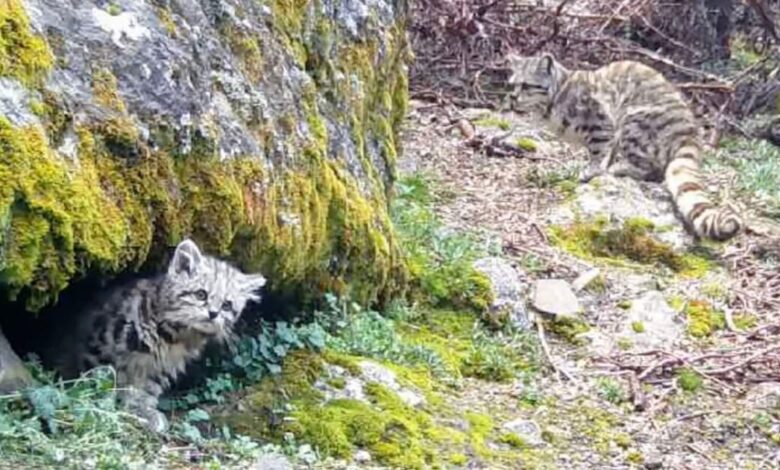
In the high-altitude regions of the Andes, where steep slopes and thin air are part of everyday life, one of the world’s most elusive wild cats has been captured on video. A family of Andean cats, long hidden from researchers, unexpectedly appeared before a hidden camera. This achievement is the result of three years of dedicated work by specialists studying these rare predators.
The Andean cat is endemic to South America and is found exclusively in Peru, Bolivia, Chile, and Argentina. These animals prefer to live at elevations from 1,800 to 4,000 meters, where conditions are extremely harsh. Due to their elusive nature and low numbers, the species is considered one of the least studied among the region’s large felines.
The Andean cat resembles a domestic cat in appearance, but stands out for its longer, denser fur with a gray-brown tint and a distinctive pattern of dark spots. Its tail is especially notable: bushy and marked with bold rings, making the animal easily recognizable among other members of the family.
The footage clearly shows a female with a kitten carefully traversing the rocky slopes. Their behavior demonstrates a remarkable adaptation to life in extreme conditions: the cats move silently, blending perfectly into the landscape, which helps them remain unnoticed by most predators and by humans.
Researchers note that such video footage is extremely rare. To capture it, they had to set up dozens of cameras in hard-to-reach locations and regularly check the equipment despite harsh weather conditions. This approach not only yielded unique images but also provided new insights into the habits and population of the species.
The Andean cat is endangered. The main risk factors are habitat destruction, declining prey populations, and poaching. Scientists emphasize the importance of further research and conservation efforts to prevent the extinction of this unique species in the coming decades.
The emergence of new video materials has become a significant event for zoologists and conservationists. They hope that increased attention to the issue will help attract additional resources to protect rare animals and preserve the biodiversity of the Andes.