On Sunday, the Renfe commuter rail network was once again in the spotlight due to a series of technical failures and forced stoppages on several lines. The most serious issues affected the R3 line, which connects L’Hospitalet de Llobregat and Puigcerdà, as well as routes between Barcelona and Tarragona.
On Saturday, service on the R3 line was completely halted in the afternoon due to damage to the overhead power lines. On Sunday morning, trains on this section resumed operations, but a few hours later service had to be suspended again due to a new breakdown. This time, the interruption occurred between the stations L’Hospitalet de Llobregat and La Garriga.
Passengers en route had to use buses that Renfe quickly provided to transport them between stations. Passengers were advised to travel to Granollers station for transfers to these buses, which could be reached via lines R4 and R2 Norte.
At the same time, interruptions were also reported on other routes connecting Barcelona and Tarragona on Sunday afternoon. Specifically, lines R2Sud, R14, R15, R16, and R17 experienced delays and cancellations. On one section between Cunit (Tarragona) and Cubelles (Barcelona), a train stopped due to a technical failure and passengers had to be evacuated.
By Sunday evening, service had been restored on most routes, and trains were gradually returning to their regular schedules. Operators said that frequency and intervals would be normalized soon.
Civil protection services lifted the heightened alert for railway incidents after the evacuation of passengers was completed and major disruptions were resolved.
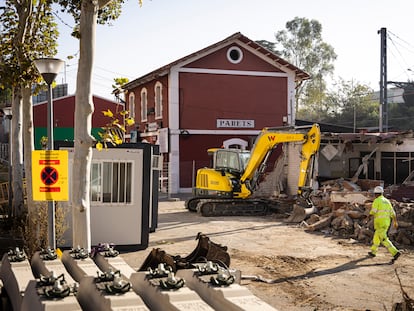
The situation on the R3 line remains tense, especially in the run-up to major track-doubling works between Parets del Vallès and La Garriga stations, which are set to begin in just a month. These upgrades are intended to improve the line’s reliability and capacity, as it regularly faces technical issues.
Commuter train passengers in Catalonia have been experiencing service disruptions more frequently in recent months, leading to growing dissatisfaction and prompting the operator to take additional steps to ensure transport stability.