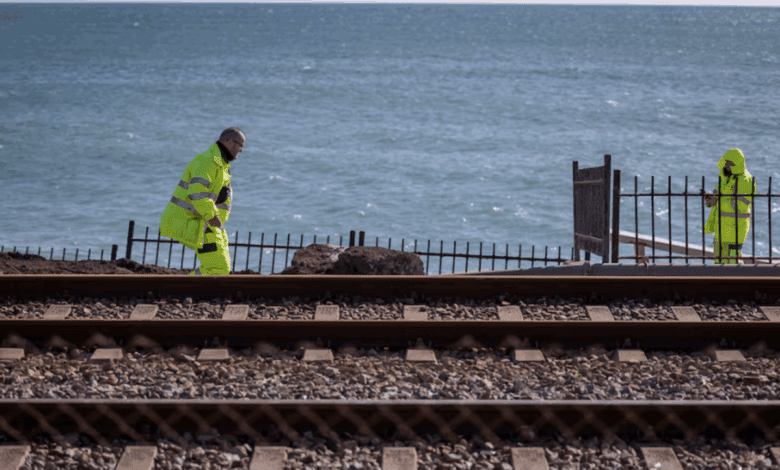
The situation on Catalonia’s railways has once again come under the spotlight: thousands of passengers are facing serious disruptions to Rodalies train services. Following the tragic incident on the R4 line, where a trainee driver died as a result of an embankment collapse, the infrastructure has yet to be fully restored. As a result, residents and visitors to the region are forced to adjust their routes daily, dealing with delays, cancellations, and the need to transfer to buses.
This Sunday, restrictions and partial closures of railway lines remain in effect. On 179 sections, train drivers are forced to reduce speed to ensure safety. This leads to increased intervals between trains and significant delays. In some cases, rail traffic is completely suspended, leaving buses as the only option on the most problematic routes.
Aftermath of the accident
Almost two weeks have passed since the disaster on the R4 line near Gelida, yet the consequences of the accident are still being felt across the Rodalies network. Catalan authorities and railway company representatives promise to accelerate restoration work, but passengers continue to experience inconveniences. On the R1 line, trains run only between L’Hospitalet and Blanes, while the section to Maçanet-Massanes is served by buses. On R2 and R2 Sur, service is limited, trains make additional stops, and the frequency has been halved.
The situation is particularly difficult on the R3 line: rail service between L’Hospitalet de Llobregat and Fabra i Puig remains operational, but beyond that toward Puigcerdà, passengers have to transfer to buses. On the R4 line, where the tragedy occurred, delays exceed half an hour, and trains are not running at all between Sant Sadurní d’Anoia and Martorell Central—bus routes have also been organized here. On some stretches between Martorell Central and Terrassa Central, trains are forced to move at minimum speed, further increasing travel times.
Restrictions and alternatives
The R8 line, where the Rubí tunnel is located, remains completely closed, which has an especially severe impact on freight transport. Regional routes in northern and southern Catalonia are also experiencing disruptions: in Girona, on the R11 line between Figueres and Portbou, only buses are operating, while in southern directions, such as R13 and R14, bus connections have also been established between Sant Vicenç de Calders and Lleida. In Tarragona, between Reus and Riba-Roja d’Ebre, as well as La Plana de Picamoixons, trains have been replaced by buses.
Passengers note that schedule information often changes at the last minute, and some stations lack clear announcements about transfers. As a result, many are forced to spend two to three times longer on their journey than usual. For some suburban residents, this means they cannot get to work or school on time, while tourists face wasted time and additional expenses.
Restoration work
Authorities in Catalonia and railway services continue work to restore damaged sections. According to government representatives, the priority remains the safety of passengers and staff. However, the repair pace raises questions among experts: despite round-the-clock work by crews, full service has yet to be restored across all lines. The situation is expected to improve slightly at the beginning of next week, but no one is prepared to guarantee a return to the previous schedule at this time.
Alongside this, the modernization of the entire Rodalies infrastructure is under discussion to prevent such incidents in the future. In recent years, Catalonia’s commuter rail network has repeatedly faced criticism over worn tracks and inadequate funding. The current events have only intensified calls for reform and further investment in the region’s transport system.
Context and similar cases
Railway disruptions and accidents on the Rodalies lines are nothing new for Catalonia. In 2023, following heavy rains, several sections were flooded, leading to mass cancellations and lengthy delays. In 2024, technical failures on the R2 line also forced passengers to switch to buses. Each time, these situations spark a wave of public frustration and prompt authorities to seek new solutions. The issue of railway infrastructure modernization remains pressing, and recent events only highlight its urgency.