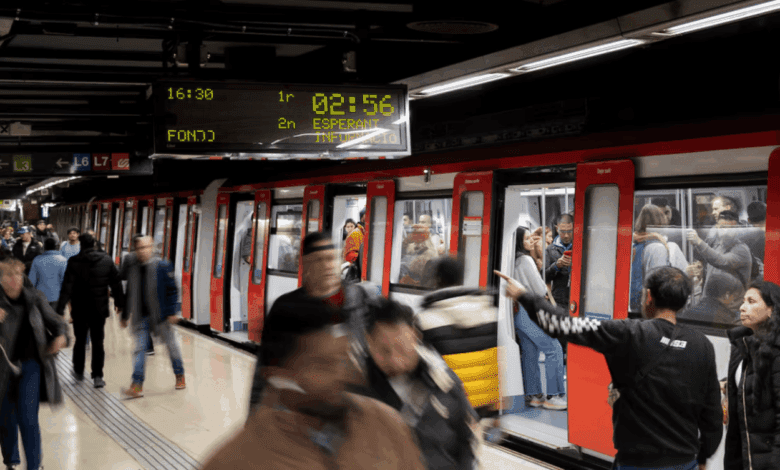
On Wednesday, frustration and fatigue were palpable at Catalonia’s Rodalies commuter train stations and overcrowded bus stops. Thousands of people, accustomed to daily disruptions, once again found themselves hostage to a transport collapse. This time, the chaos was intensified by tragedy — a fatal accident in Gelida, adding despair to the usual turmoil. But there was no surprise on anyone’s face: for most commuters, incidents like this have long since become routine.
Every day, more than 400,000 people are forced to deal with delays, cancellations, and confusion. In the past three years, Rodalies suffered 291 days of disruptions, with more than 2.4 million passengers affected. For regular commuters, such incidents are not the exception, but the rule. “This is nothing new for those who travel by train daily. Delays are simply the norm now,” said one disappointed passenger who wasn’t able to make it to work.
A chronicle of frustration
For years, frustration with Rodalies has simmered among Catalonia residents. Back in 2007, large-scale disruptions caused by the construction of the AVE high-speed line in L’Hospitalet de Llobregat triggered mass protests. Hundreds of thousands of people took to the streets demanding control over their own infrastructure. Political tensions only fueled the discontent — even government allies couldn’t agree on who was to blame for the transport crisis.
Nearly twenty years have passed since then, yet the debate over who is responsible for the chronic underfunding of the railway system continues. During this time, Catalonia has built new kilometers of high-speed lines, but commuter routes have been left behind. The question of who should finance infrastructure upgrades remains a sticking point between Madrid and Barcelona.
Politics and Infrastructure
In 2010, Rodalies was formally placed under the control of the Catalan government, but real authority remained limited. The restoration of dialogue between the central government and the Generalitat after the political crisis brought renewed attention to the state of transport networks. In recent years, authorities have promised major investments and upgrades, but for passengers, the changes are barely noticeable.
The Rodalies rail network is worn out: many sections have not seen repairs in decades, almost half the routes are single-track, and some segments are overloaded by 75%. Despite annual investments of hundreds of millions of euros, progress is painfully slow. Passengers are forced to deal with daily uncertainty: schedules change at the last minute, and delays have become part of everyday life.
People and Numbers
For most Rodalies users, every morning is a lottery. Some wake up an hour earlier to avoid being late for work, others lose an entire workday when a train is canceled. Employers have stopped accepting transport delays as an excuse, and passengers feel powerless against a system that just doesn’t work.
From 2022 to 2024, Rodalies and Catalonia’s regional train lines recorded 693 incidents—an average of one and a half disruptions per day. In that period, over 2.4 million people were affected by delays, with total lost minutes surpassing 420,000, equivalent to 291 days of downtime. These figures speak for themselves: the region’s transport system is in a state of chronic crisis.
No change in sight
Despite tragedies and constant disruptions, for most Rodalies passengers, it’s just another episode in a long string of failures. People are tired of waiting for change and no longer believe officials’ promises. Each new incident only adds to their frustration and despair, but it no longer surprises anyone. Catalonia’s commuter trains follow their own set of rules, and passengers are left finding ways to survive the chaos.