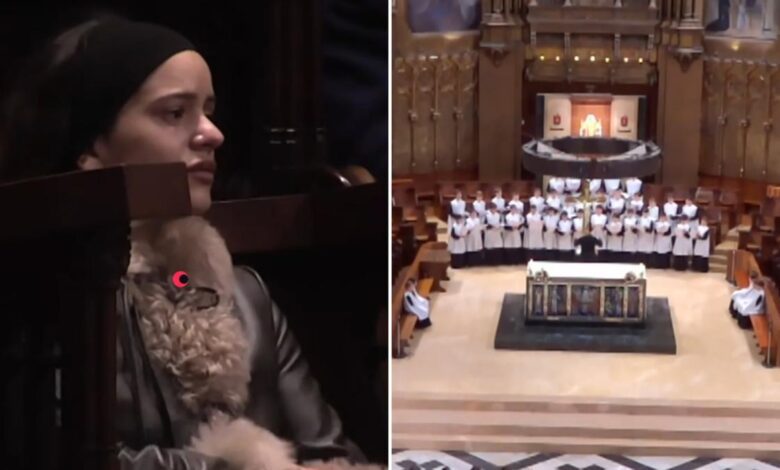
The premiere of Rosalía’s new album Lux, awaited by fans for three years, instantly captured the attention not only of music critics but also the public in Catalonia. The reason was not just the music, but also the participation of the renowned Escolanía de Montserrat choir. This collaboration seemed a cause for pride, yet it turned out differently.
Instead of excitement, both the singer and the choir faced accusations. The reason: the songs are performed in Spanish. For some Catalan nationalists, this came as a real shock. In their view, the Montserrat choir—a symbol of the region’s spirituality—should not have been involved in a project featuring not Catalan, but Castilian. The controversy quickly spread across social media and radio, filled with talk of ‘betrayal’ and ‘loss of identity.’
Interestingly, similar accusations have surfaced in the past. People recalled the case of Sopa de Cabra, a band once criticized for performing songs in Spanish. Back then, the musicians had to defend their right to creative freedom. Decades have passed, but language debates in Catalonia still stir up deep emotions.
Double standards and forgotten scandals
Paradoxically, those who protest the loudest about the use of Spanish in the album prefer to ignore other controversial issues linked to Montserrat. For instance, a memorial stands on the monastery grounds honoring a military unit that supported the rebels in 1936. More recently, a monk was convicted of crimes against minors, yet these topics have not sparked such an outcry among nationalists.
All of this suggests that for some critics, symbols and language matter more than actual problems. As long as Catalan is spoken, many things are overlooked. But the moment Spanish appears, a storm of outrage erupts. This story once again highlights how sensitive issues of identity and culture are in Catalonia, and how easily they can trigger major scandals.