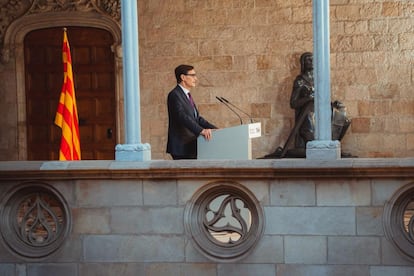
Catalonia has reached a point where political stability and quality of life directly depend on the decisions that will be made in the coming weeks. The return of Salvador Illa to the duties of President of the Generalitat became an event that could shape the region’s future. After nearly a month away due to health reasons, the head of the autonomous community resumed his place in the Palau hall to mark a new chapter in Catalonia’s governance.
Illa appeared before journalists noticeably thinner but with firm determination. He thanked the Vall d’Hebron doctors for their professionalism and emphasized that he had personally felt how vulnerable even the strongest can be. His remarks about understanding what Catalans expect came against a backdrop of recent upheavals: breakdowns in Rodalies, devastating rains, strikes, and government reshuffles.
Challenges for the region
The past few weeks have been a real test for Catalonia. The Rodalies railway network once again found itself at the center of a scandal after a fatal incident and widespread delays. Meanwhile, budget talks were postponed and strikes spread not only through the transport sector but also into education. During this difficult period, the sudden illness of the region’s leader only deepened the sense of uncertainty.
Ilya, who continues to undergo antibiotic treatment, did not hide that Catalonia is going through difficult times. He promised that every step taken by the government would be thoughtful and consistent, making improvements in infrastructure and social services a priority. In his speech, he urged people not to give in to pessimism and not to lose faith in the region’s potential.
A Focus on Healthcare
The president paid special attention to the healthcare system, which has come under the spotlight due to the doctors’ strike. He noted that the compassion and professionalism of doctors should serve as an example for all areas of life. In his view, political debates should not lead to division, and that leaders’ responsibility is to seek solutions, not scapegoats.
On that same day, Catalonia saw a doctors’ strike, which added to the tension. Ilya stressed that the region is capable of overcoming the Rodalies crisis and other challenges if it works together. He called for ambitious yet realistic steps to restore citizens’ trust in the authorities.
Political Risks and Expectations
The situation is complicated not only by internal problems, but also by pressure from the opposition. Parliament has already twice demanded the resignation of the head of the territories department responsible for Rodalies. Amid protracted budget negotiations and a wave of strikes, the government’s position appears unstable.
Crises like these are not uncommon in Spanish political life. For instance, a recent discussion focused on the strategy of one opposition party that actively engages with residents of small towns and leverages dissatisfaction with transport and social policy to reinforce its position. For more on how political forces use crises to expand their influence, read the article on regional campaign tactics.
In the coming weeks, Catalonia will face decisions that will shape not just the region’s economic but also its social dynamics. Authorities have pledged to move forward step by step, avoiding mistakes of the past. However, public frustration and fatigue from ongoing crises may become significant obstacles on the road to stability.
In recent years, Catalonia has repeatedly experienced major disruptions in its transport system and strikes in key sectors. In 2024, mass protests by railway workers paralyzed traffic between Barcelona and the suburbs, and in 2025, strikes by teachers and doctors temporarily shut down schools and hospitals. Each time, the authorities promised reforms, but systemic problems kept returning. Such situations serve as a litmus test for politicians, revealing their ability to respond to challenges and restore public trust.