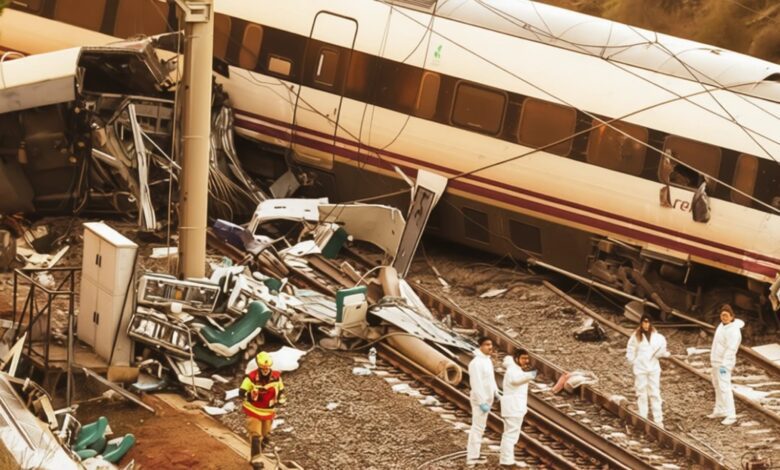
The events that unfolded after the railway disaster in Adamuz (Córdoba) have struck a particular chord with Spanish society. The relatives of the victims have found themselves not only in the epicenter of grief, but also faced with new injustice: the disappearance of personal belongings and money belonging to their loved ones has sparked a wave of outrage. Once again, the issues of safety and respect for the memory of victims have come under threat, casting doubts over trust in the system.
Families who arrived at the scene of the tragedy were shocked not only by the scale of the disaster, but also by what they discovered: many valuables belonging to the victims were missing. Money, jewelry, documents—all disappeared amid the chaos following the accident. Relatives are convinced these are not accidental losses, but the result of deliberate misappropriation.
The situation is aggravated by the fact that the area around the incident was almost entirely unguarded. This provided free access for outsiders, which, according to the affected families, led to a wave of theft. Families are demanding explanations and immediate action from those responsible to ensure such incidents are not repeated.
Response and demands
The relatives of the victims did not limit themselves to verbal complaints. They have officially appealed to the railway company, demanding an investigation into the disappearance of property. Their statements express not only the pain of loss, but also outrage that the tragedy became an opportunity for looting. People insist on stricter control at the sites of such incidents.
Public concern is growing: if it’s impossible to safeguard the belongings of the deceased even at such moments, how can the living feel protected? Questions about the way emergency services operate at the accident scene are becoming increasingly urgent. Many believe that the lack of proper oversight isn’t just oversight—it’s a systemic problem that needs immediate resolution.
As the investigation is only beginning, families continue to demand the return of missing possessions and that those responsible be held accountable. They are supported by public organizations, which stress that respecting the memory of the deceased is not only a moral duty but also a measure of society’s maturity.
Consequences for the system
This incident once again raises the issue of revising emergency response protocols. Experts point out that the lack of clear instructions and supervision at the scene can lead to similar incidents recurring. Authorities, responding to public outcry, have pledged to review the current procedures.
At the same time, many Spaniards are asking: why do these situations keep happening? Have the lessons of past tragedies really not been learned? There are still no clear answers to these questions, but one thing is certain—the public demands change and assurances of safety even in the most difficult circumstances.
Losing personal belongings during a tragedy is not only a material loss, but also an additional trauma for families. For many, memories of loved ones are tied to specific objects that may now be lost forever. This gives the situation an especially emotional dimension and intensifies demands for a thorough investigation.
Context and similar cases
In recent years, Spain has already faced similar incidents following major accidents and disasters. After the rail tragedy in Galicia in 2013, complaints were also received regarding the disappearance of victims’ personal belongings. Comparable cases have occurred after traffic accidents as well, when proper security was not provided at the scene.
Public opinion in such situations always tends toward tightening control and revising standards for emergency services. In some regions, additional security measures were introduced after high-profile scandals; however, practice shows the issue remains relevant. Each new case sparks discussion and a search for solutions to help prevent the recurrence of such tragedies in the future.