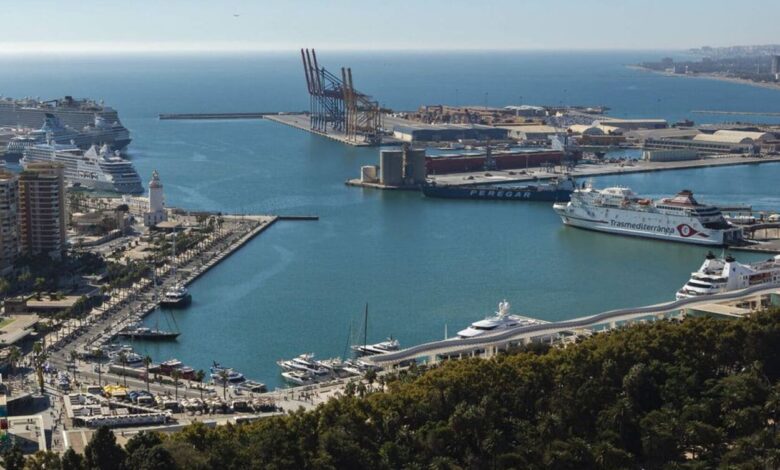
In 1996, the Port of Málaga began a large-scale modernization of its container terminal. Nearly thirty years have passed, and legal proceedings related to the project are only now coming to a close. What started as an ambitious initiative turned into one of the region’s biggest corruption scandals.
The scandal was uncovered by chance: in February 2008, the vessel Stolt Capability collided with a dock support. It was then discovered that the length of the piles was shorter than stated in the documents and that the work costs had been inflated. Two years later, another incident occurred—a container ship was unable to dock due to insufficient depth at the pier, even though the paperwork claimed the depth met requirements. These events sparked a major investigation.
Internal crisis
Following the discovery of these violations, port management found itself at the center of the scandal. Director José Antonio Caffarena, who was the first to report the problems, was fired by the new port president, Paulino Plata, just two weeks after his appointment. Port employees staged a prolonged strike, while union leader Juan Antonio Triviño went on a hunger strike to draw attention to the corruption.
At that time, the port was experiencing financial difficulties: after losing oil shipments in 2000, revenues plummeted. The law required port authorities to be financially self-sufficient, forcing them to seek unconventional solutions. One such initiative was a high-rise hotel project, which remains unbuilt to this day due to bureaucratic hurdles.
Court proceedings
It was only 13 years after Caffarena’s initial statements that the court delivered its verdict. Two engineers responsible for overseeing the work were found guilty of document forgery and embezzlement. They were sentenced to one and a half years in prison and received a three-year ban from working in their profession. The court determined that the engineers had deliberately falsified records to boost contractor profits at the state’s expense.
The companies Dragados and Sando, which were involved in the construction, were found to have received illicit gains. They must now pay compensation according to their share in the project: Dragados — 48%, Sando — 32%. A third company, Urbaser, had previously reached a pretrial agreement and already paid its share of the damages.
Fraud scheme
The court provided a detailed account of how the costs were inflated. In one instance, contractors claimed that concrete structures were embedded deeper into the seabed than they actually were, allowing them to obtain nearly three million euros beyond the allotted amount. Another 850,000 euros were obtained through fictitious increases in dredging volumes. An additional 236,000 euros were appropriated by artificially exaggerating the depth and scope of berm construction work.
The total damage amounted to about four million euros. The court ruled that all parties involved in the scheme must compensate the port for the losses. Currently, the compensation amount, not including interest, exceeds three million euros.
Appeals and Consequences
Dragados and Sando have already announced their intention to appeal the verdict to the Supreme Court. Representatives from Sando confirmed they are considering filing a cassation appeal. Dragados has yet to issue an official statement.
Carlos Rubio, head of the port authority, emphasized that restoring the funds will be an important step toward justice and rebuilding the port’s reputation. According to him, the institution’s financial situation is no longer as critical as it was during the peak of the scandal.
Political Implications
The investigation implicated three former port presidents, all of whom were members of the Socialist Party. During Enrique Linde’s tenure, controversial construction work was carried out. Under the brief leadership of José Sánchez Maldonado, the investigation failed to progress adequately. Under Paulino Plata, the director who was the first to report the violations was dismissed.
The court took into account the length of the proceedings and reduced the sentences due to the drawn-out process. Nevertheless, the case became one of the most prominent examples of the fight against corruption in Andalusia’s infrastructure projects in recent decades.