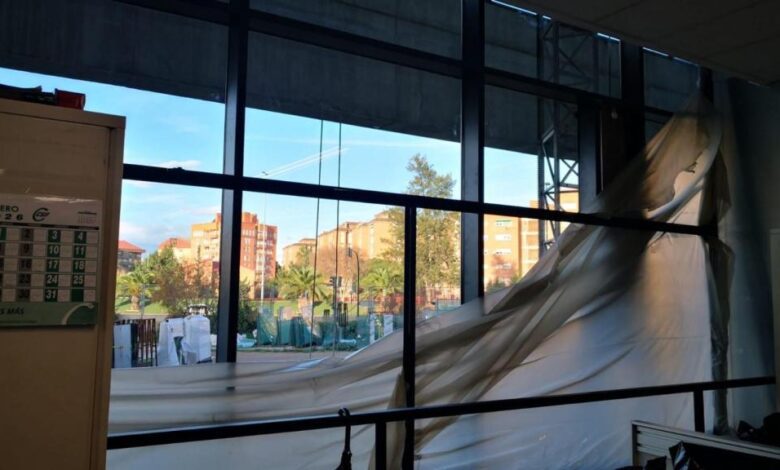
The situation at the Murcia courthouse (Ciudad de la Justicia de Murcia) has become a wake-up call for anyone dealing with bureaucratic delays and inefficient management of public facilities. More than 300 employees have found themselves working in conditions that can hardly be considered acceptable: cold, constant noise, and unpleasant odors have become their daily reality. All of this stems from a prolonged replacement of the glass facades, a process that has dragged on for several months with no clear end date in sight.
The problem is worsened by the extremely slow pace of the work. The old glass panels were removed immediately, but the new ones are being installed with considerable delays. As a result, staff are forced to work in offices where the windows are temporarily covered only with plastic sheeting held in place by tape. In winter, this means not only cold but continuous drafts and an inability to focus due to construction noise and a burnt odor lingering in the offices and courtrooms.
Impact on work
In such conditions, proper work is impossible. Some hearings have had to be moved to other locations to avoid exposure to extreme temperatures and noise. Employees now come to work wearing scarves, gloves, and warm jackets—this has become the new normal in the building. At the same time, some workers have lost the option to work remotely, even though it was previously allowed. No official explanation has been given for the end of remote work, further fueling discontent among the staff.
The problem is particularly acute on the five floors facing the rear facade of the building, where most of the renovation is taking place. These floors house not only offices, but also courtrooms and rooms visited by citizens and legal professionals involved in proceedings. Unlike the street-facing side, where the work does not affect workplaces, the back part of the building has become a real discomfort zone for everyone working in or visiting the court.
Response and Demands
The building management and those responsible for the renovations have not provided any information about when the work will be completed. Employees and unions have repeatedly requested that the process be expedited and that remote work be reinstated, but so far to no avail. The lack of transparency and dialogue only adds to the internal tension among staff.
Unions are demanding immediate intervention from the Ministry of Justice and an acceleration of work on replacing the glass facades. They insist that new panels be installed in stages, rather than dismantling all at once, in order to prevent similar situations from happening again. They are also calling for the restoration of remote work options for all affected employees until the renovations are complete.
Impact on Citizens
Infrastructure issues affect not only employees but also ordinary citizens who come to court for their cases. Postponements of hearings, delays in case reviews, and an overall decline in service quality create additional stress for everyone involved in judicial proceedings. When a building is not suited for normal operations, the quality of provided services also suffers.
All this is happening against the backdrop of no official comments from responsible authorities. The city administration and the Ministry of Justice have yet to announce any plans for completing the repairs or measures to support staff. This situation raises questions about the competence and responsibility of government bodies tasked with maintaining and operating public buildings.
Context and similar cases
In recent years, Spain has repeatedly faced scandals related to prolonged renovations of state institutions. In Valencia and Barcelona, municipal employees have also complained about being unable to work due to lengthy construction and a lack of basic conditions. In some cases, this has led to temporary shutdowns of institutions and mass protests. Such situations raise questions about the need to reform the management system of public facilities and stricter control over contractors. Safety and comfort at work are becoming increasingly urgent issues as the number of such incidents rises across the country.