Spain’s railway network is once again in the spotlight after it was revealed that the large-scale modernization of the Madrid-Seville line, which received over 111 million euros from European funds, was not fully completed. For passengers and residents, this raises not only safety concerns but also questions about the transparency of public and European spending. The repercussions could affect not just the transport sector but also trust in government institutions.
Spanish authorities initially stated the need to bring the country’s oldest high-speed rail line up to modern standards. The project aimed to replace key track components, renovate bridges and tunnels, and upgrade safety and drainage systems. However, after the tragedy at the Adamuz section, where 46 people died, it emerged that parts of the work planned under the European project were never carried out.
Unfinished modernization
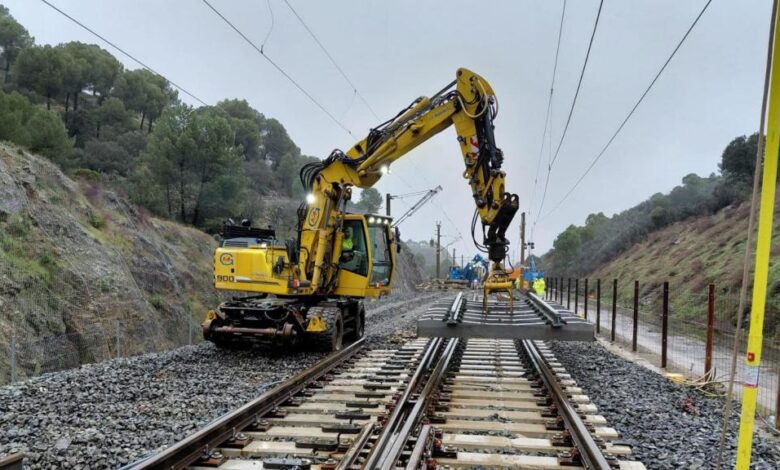
The European Commission approved funding on the basis that the Madrid-Seville line had long failed to meet modern safety and technical standards. The project intended to update over 435 kilometers of track to improve the line’s reliability and resilience. However, after the work was declared finished, government officials admitted that not all rails and sleepers had been replaced, and on some sections, including the accident site, old components remained unchanged.
Official documents from the European Commission stated that the project was supposed to include a complete replacement of worn rails and sleepers, reinforcement of bridges and tunnels, installation of new fencing, and renovation of service buildings. However, in reality, some of these measures remained only on paper. This sparked controversy among politicians and the public, and prompted new investigations.
Political disagreements
After the tragedy, opposition representatives appealed to the European Commission demanding clarification on how the allocated funds were actually spent. Members of the European Parliament from the Partido Popular insist on the need to audit all stages of the project’s implementation and to determine why key works were not completed. Special attention is being paid to whether the technical shortcomings of the line could have affected safety and contributed to the disaster.
Parliament is also discussing the possible involvement of several companies that took part in the modernization in corruption schemes. The opposition links the situation to recent scandals surrounding the Ministry of Transport, claiming that a lack of oversight and transparency may have led to the misappropriation of funds. The issue of possible mismanagement of European funds will be raised at the upcoming hearings in the Senate.
Responses and accusations
Spain’s Minister of Transport initially denied any issues, but under mounting evidence was forced to admit that not all work had been completed in full. In particular, it was revealed that in the section where the train derailed, old sleepers had not been replaced, despite this being required under the European project terms. Additionally, some equipment designed to monitor track conditions was found to be out of order, which also became a point of criticism.
The head of the railway company Adif is expected to address the Senate soon, where he will have to answer questions about compliance with technical regulations, quality control, and why some modernization work remained unfinished. The opposition plans to push for full transparency and a comprehensive audit of all expenditures related to this project.
Impact on the sector
The scandal surrounding the Madrid-Seville line may lead to a review of how infrastructure projects are funded in Spain. There is already discussion about forming a new parliamentary commission to analyze the entire national railway network’s condition. Issues of safety, service quality, and the efficient use of resources are becoming central to future decisions in Spain’s transport sector.
In recent years, Spain has repeatedly faced challenges in implementing major infrastructure projects. Failures in upgrading railway lines, delays in building new sections, and scandals over the allocation of funds have already sparked public debate. Such situations undermine trust in state institutions and call for new mechanisms of oversight and transparency.
Earlier, we covered in detail the investigation launched after the tragedy on the Madrid-Seville line. In the article “111 Million Euros for AVE: Investigation After the Tragedy on the Madrid-Seville Line” it was reported that key works needed to upgrade the mainline had not been completed, calling into question the fate of European funds. At the time, the focus was on possible corruption and the causes of the catastrophe.