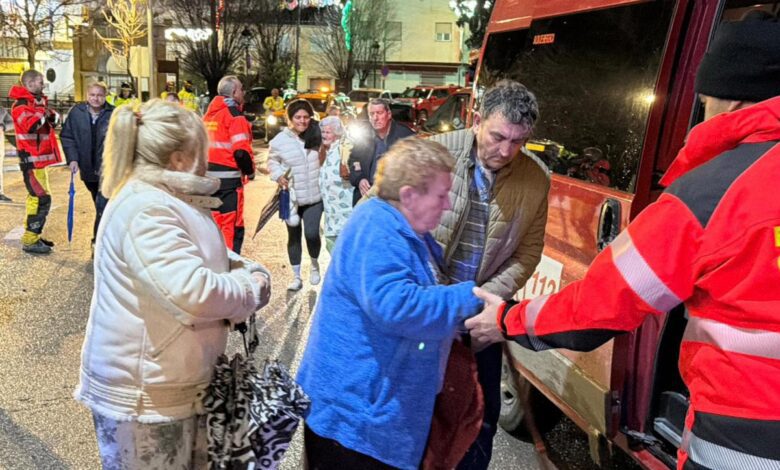
The aftermath of the powerful rains that hit Andalusia is being felt across Spain. For local residents, this is more than just a weather anomaly—it’s a matter of safety, access to education, and the ability to return to daily life. Authorities are forced to balance the need to resume classes in schools with the risk of new evacuations due to the threat of flooding.
Situation in the Regions
In just two days, more than 400 liters of rainfall per square meter fell in Cádiz and Málaga. Even though rain intensity has decreased, the danger remains: the soil is saturated with moisture and the snowmelt season is approaching. The orange alert is still in effect in western Andalusia, and locals are closely watching the forecasts with concern.
A total of 116 roads nationwide are closed due to water and snow. In Andalusia, despite partial restoration of traffic, there are still areas where transportation is impossible. The situation is especially difficult in the provinces of Cádiz, Córdoba, Sevilla, Jaén, Málaga, Granada, Huelva, and Almería. In some areas, tire chains or winter tires are mandatory.
Back to School
The emergency committee has decided to reopen most schools and lyceums in Andalusia. The exceptions are Almería and several municipalities, where evacuations are ongoing or the threat to children and staff persists. In eastern areas, where wind gusts over 90 km/h are expected, classes in kindergartens, primary and secondary schools are suspended until further notice.
The situation in Cádiz is gradually stabilizing, but restrictions remain in the mountainous area of Grazalema and along the coast of Gibraltar. In Jerez, some schools are still unable to receive students due to flooding and evacuations. In Jaén, restrictions are related not only to rain, but also to strong winds.
Evacuations and searches
In Granada, 120 residents of the village of Dúdar were forced to leave their homes due to the overflowing Aguas Blancas river and the full Kentar reservoir. People were accommodated in a hotel in the provincial capital after rescuers cleared the only road to the isolated settlement. The evacuation was organized and supervised by specialists and emergency services.
A total of around 3,500 people have been evacuated in Andalusia. Many are already returning home, especially in the western areas where water levels have started to decrease. However, thousands still await permission to return, and everything depends on weather conditions and the state of infrastructure.
In Málaga, the search continues for a woman swept away by the Turvilla river current as she tried to save her dog. Firefighters and special units of the civil guard are involved in the operation, working in difficult conditions.
Situation in other regions
In Extremadura, authorities have decided to evacuate residents of La Basana and Valuengo due to the threat of the Ardila River overflowing. The cause is a blocked Valuengo dam, where a faulty gate prevents excess water from being released. This has increased tension in a region already facing difficult road and transport conditions.
Across Spain, dozens of roads remain closed, and traffic is disrupted by snow in 16 regions. In 21 provinces, chains or winter tires are mandatory. Drivers are forced to seek alternative routes, while emergency services are operating around the clock.
Forecasts and new threats
Meteorologists warn that although Cyclone Leonardo is gradually losing strength, a new Atlantic storm is expected by the weekend. It will bring increased rainfall and stronger winds, especially in the southern and southeastern regions of the country. Stormy seas are forecast along the coasts of Galicia and Cantabria, which could lead to further restrictions and evacuations.
In Andalucía, the orange alert level remains in effect due to winds and waves, as well as the yellow alert for precipitation. Authorities urge maximum caution: the soil cannot absorb more water, and the hydrological situation in several basins remains critical.
Reflecting on recent events, it’s worth noting that such weather disasters are happening more frequently in Spain. In recent years, the country has faced devastating downpours and floods, leading to mass evacuations and significant losses. For instance, in 2023 a similar storm already paralyzed transport and forced thousands to leave their homes. These situations pose a serious challenge to infrastructure and emergency services, and demand that residents quickly adapt to changing conditions.
Earlier, we covered in detail how storm Leonardo brought traffic to a standstill on hundreds of roads, triggered mass evacuations, and led to school closures. In our report “Hundreds of roads closed due to storm Leonardo: evacuations and school cancellations” you can find out how events unfolded in the first hours and days after the disaster struck.