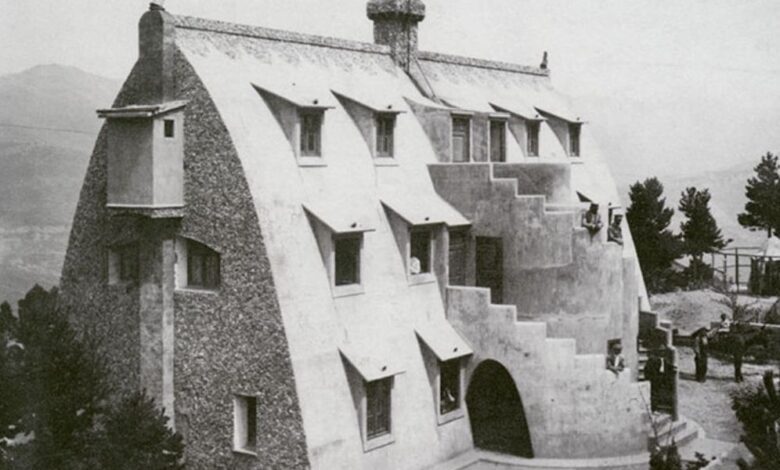
Catalan architecture receives a new boost: Chalet del Catllaràs is now officially recognized as a work by Antoni Gaudí. This decision, based on academic research, ends decades of debate and further strengthens Catalonia’s position on Spain’s cultural map. For locals and the tourism sector, this event opens up new opportunities, while for experts it settles one of the country’s most discussed architectural heritage questions.
According to El Confidencial, a study commissioned by the Generalitat’s Department of Culture and carried out by the Gaudí Chair at the Polytechnic University of Catalonia has provided convincing evidence of authorship. Experts analyzed archival documents, blueprints, and conducted comparisons with the architect’s other works. The key argument was the unique structure of the main arched element, built according to a complex geometric scheme that only Gaudí could have implemented in the early 20th century. The analysis showed that the arch’s inner curve matches neither a parabola nor a catenary, but uses a distinctive form calculated for optimal load distribution.
Architectural details
During their work, experts noted the 45-degree room layout typical of Gaudí’s style, which helps avoid long corridors. They also identified elements previously thought lost, such as the vaulted structure in the annex resembling solutions used in other famous works by the master. Comparative analysis with Torre Bellesguard and other sites confirmed similarities in design approach and details.
Although Gaudí himself did not personally oversee the construction—some of the work was likely carried out by his associate Juli Batllevell—the study proves that the original idea and design were his. This explains why the architect did not publicly claim authorship: the final implementation differed from his initial concept, leading to professional doubts that persisted for more than a century.
Historical context
Chalet del Catllaràs was built between 1901 and 1908 at the request of industrialist Eusebi Güell to house British engineers working at the region’s coal mines. The building is located in the mountains at an altitude of over 1,300 meters, which determined its unusual shape and adaptation to harsh weather conditions. The triangular design facilitates snow shedding, while the interior is divided into six apartments across three floors.
The inclusion of Chalet del Catllaràs among Gaudí’s works strengthens the significance of industrial architecture in his heritage. Previously, only Cooperativa Obrera Mataronense and Bodegas Güell were considered in this category. For the municipality of La Pobla de Lillet, this recognition means increased tourist interest and the opportunity to be integrated into international routes dedicated to the architect’s legacy.
Regional impact
Local authorities have already announced plans to develop new excursion routes linking Chalet del Catllaràs with historic mines and natural attractions. This is expected to attract more visitors and boost infrastructure development. In addition, the municipality hopes to obtain confirmation of Gaudí’s authorship for other sites, such as Jardines Artigas, which residents have long considered part of his legacy.
In recent years, new evidence about previously disputed architectural sites has been surfacing more frequently in Spain. For example, the authorship of several buildings in Barcelona was recently reassessed, sparking lively debates among experts and the public. Such discoveries not only reshape the perception of cultural heritage but also contribute to tourism and the local economy. The Catalan experience demonstrates how scientific methods can resolve longstanding disputes and give new momentum to regional development.