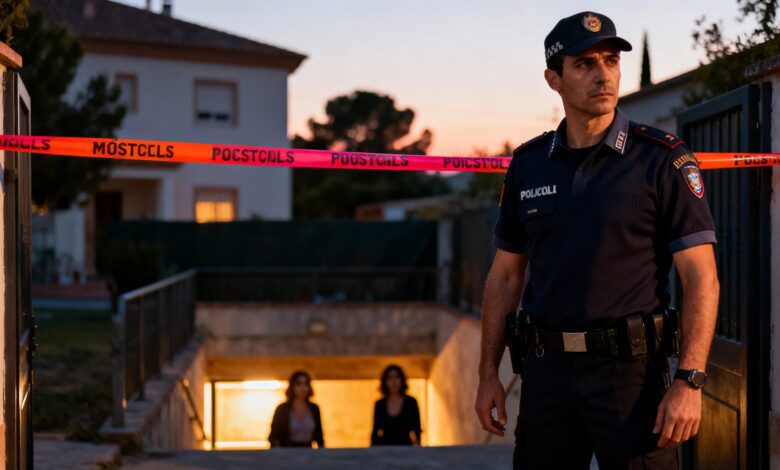
In Móstoles (Madrid), police carried out an operation that has become one of the most talked-about in Spain in recent months. As a result, law enforcement dismantled a criminal group organized by women engaged in human trafficking for sexual exploitation. During the raid, 18 women were freed from a private residence where they had been held in extreme isolation and under constant surveillance. This event has once again brought attention to the issues of safety and rights for vulnerable groups in the country.
The women, confined in the basement of a residential building, faced severe restrictions: they were allowed to leave the premises for no more than two hours a day, and only with permission from the organizers. They all lived in cramped conditions, shared a single bathroom, and were under constant video surveillance. The lights stayed on even at night, and any attempt to break the rules was met with fines, threats, and the risk of eviction. For many of them, this house was their only possible place to live, despite the harsh circumstances.
Hidden exploitation
The system in which the women found themselves was deliberately designed to hide what was happening from outsiders. Clients and organizers remained unnoticed by neighbors and passersby, and the house itself blended in among other residential buildings. According to RUSSPAIN, such schemes became especially popular after the pandemic, as club closures and restrictions forced organizers to move their operations into private apartments and houses. This made it harder to detect exploitation and made the victims less visible to society.
Inside these houses, women were not able to choose clients or refuse work on their own. They were compelled to hand over half their earnings to organizers, and any attempt to resist led to punishment. In some cases, women did not even realize they were being exploited, perceiving the situation as a regular job or a temporary solution to housing problems.
Crime surge and emerging challenges
The shift of prostitution into private apartments and houses has become a noticeable trend in recent years. According to russpain.com, the number of detected cases of sexual exploitation in Spain has almost doubled from 2020 to 2024. In 2024, more than 7,600 people at risk were identified during 1,700 police operations. Most of the victims are women, often migrants, who face economic hardship and lack of support.
Organizers of such schemes use various methods to recruit women: promises of quick profits, help with housing, and sometimes even direct threats. In some cases, victims agree to the terms without fully understanding what they are getting into. When reality sets in, the fear of losing housing or work, or becoming a victim of violence, prevents them from seeking help.
Legal aspects and investigation challenges
In Spain, prostitution is not regulated by law: it is neither prohibited nor recognized as a legitimate economic activity. However, profiting from another person’s prostitution or human trafficking for sexual exploitation are criminal offenses. It’s important to distinguish between the roles of organizers: some recruit and transport victims, others provide premises and oversee the process.
Investigations into such cases often face difficulties. Victims are not always willing to testify, fearing consequences for themselves and their loved ones. Even when a woman decides to file a complaint, proving exploitation can be difficult, as many perceive their situation as forced but tolerable. This complicates the work of police and courts, allowing organizers to continue taking advantage of victims’ vulnerability.
In recent years, several large networks operating under a similar scheme have been uncovered in Spain. In 2023, police in Valencia freed a group of women who had been held in similar conditions. Cases of exploitation in private apartments have also been reported in Barcelona and Sevilla. These incidents show that the problem remains pressing and calls for new solutions in legislation and social support.