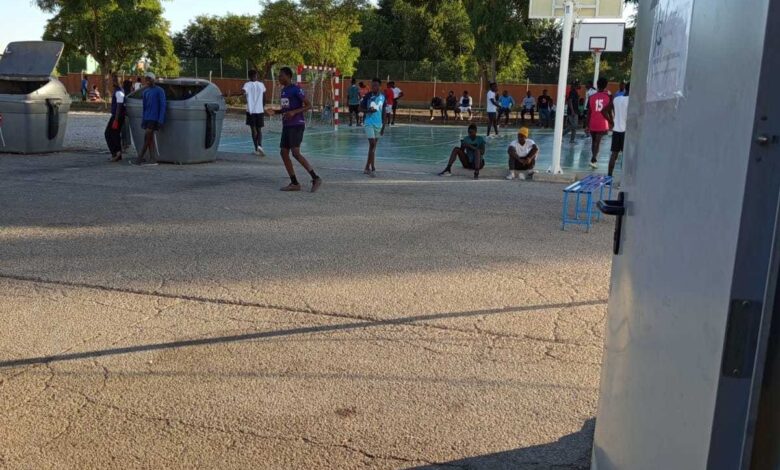
In Alcalá de Henares, staff at a major temporary accommodation center report a significant increase in the number of unaccompanied minors arriving from the Canary Islands. According to them, the facility, designed for 1,800 people, has been operating at full capacity in recent weeks. To house the new arrivals, modules are being moved and additional tents are being set up.
Inside the center, staff report that about fifty minors are currently present and are not allowed to leave the premises. Representatives from the Ministry of Inclusion, Social Security and Migration clarify that these individuals are housed separately while the juvenile prosecutor’s office awaits the results of X-ray examinations to confirm their age. The authorities emphasize that some arrivals attempt to pass themselves off as minors to avoid being transferred to stricter facilities, so careful document and identity checks are necessary. If their status is confirmed, responsibility for further placement passes to the autonomous communities.
The staff at the center note that the main issue is not only overcrowding, but also a lack of resources to maintain order. According to them, there are not enough guards on duty to control the situation, and altercations between residents are regular inside the facility, along with cases of tobacco and drug trafficking, primarily marijuana. The personnel emphasize that the strain on infrastructure continues to increase, as does the level of conflict.
Most of those housed at the center are from African countries such as Mali, Côte d’Ivoire, Somalia, and Chad. During the day, they are allowed to leave the premises, but their return is strictly regulated. Staff note that many residents are forced to engage in petty trade to survive: they sell contraband cigarettes, counterfeit clothing, or drugs, acquiring them in areas of Madrid, such as Lavapiés. According to them, some migrants face pressure from criminal groups who demand repayment of debts incurred for transportation to Spain, leading to a rise in violence.
In recent days, several incidents have occurred at the center: a fight broke out between groups from Mali and Somalia, and one of the young men experienced a psychotic episode and was returned by the police after escaping. Staff point out that their resources are limited—they only have handcuffs to ensure safety, which is not enough to prevent conflicts amid the constant arrival of new people.
The ministry, for its part, claims that the center’s system is flexible and able to adapt to changing conditions. According to their data, there are still available spots in the facility, though the exact number is not disclosed. The agency also states that round-the-clock video surveillance and regular inspections help monitor the situation, and cases of banned substances being found among residents are extremely rare. No official complaints of violence have been received, they say.
The municipal authorities of Alcalá de Henares, at the last city council meeting, demanded the closure of the center after a violent incident involving one of its residents as a suspect. Despite this, the city mayor announced that the government plans to increase the number of places in the facility. The center was originally intended to operate for several months and accommodate 200 people, but it now houses around 1,800 migrants and has been operating for over a year and a half.