The issue of depopulation is more pressing than ever for the province of Soria. This region, often called the “Spanish Lapland” due to its extremely low population density, presents a paradox: vast municipalities with almost no residents left. Yet, scattered among endless fields and forests, tiny villages still cling to life, preserving their identity through deep-rooted traditions, longstanding families, and increasingly, rural tourism. Let’s take a closer look at which of these hold the title of the smallest in Soria, both in terms of territory and permanent population.
Largest by Area
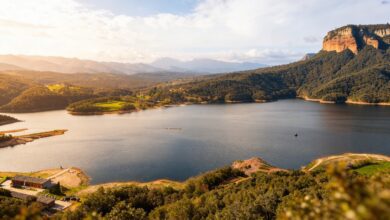
If we look strictly at cadastral maps, the title of the smallest settlement in the province of Soria goes unequivocally to Salduero. This charming village, nestled deep in the comarca of Pinares in the northwestern part of the region, sits cozily among dense pine forests, with life closely tied to the upper reaches of the Duero River. Its municipal territory is remarkably small—only 2.69 square kilometers—as it is literally squeezed between much larger neighbors: Molinos de Duero, Vinuesa, and Covaleda.
Despite its modest size, Salduero boasts typical mountain-style houses adorned with old family crests, as well as breathtaking natural scenery. According to the latest data from 2024, this compact municipality is home to 145 residents. This proves that territory size does not always determine population, as Salduero is far from being the least populated place in the province.
Everyday life in Salduero follows a rhythm entirely different from that of the city. Life here revolves around nature, the harsh mountain climate, and age-old village traditions. Proximity to larger towns like Covaleda or Vinuesa provides access to a wider range of services, yet all the essentials are available locally. Its unique location in the Pinares comarca offers excellent conditions for rural tourism and outdoor activities, appealing to those seeking tranquility and a connection with nature. Life here brings peace and natural riches, though it also requires a readiness to accept the limited amenities typical of small communities.
The battle for residents
The picture changes dramatically when we start looking for the smallest municipality in Soria by population. Here, at the very bottom of the ranking, we find three localities, each with just eight residents according to the 2024 census. This statistical tie highlights the scale of the demographic crisis in the region.
The first of these three is La Riba de Escalote, located in the comarca of Berlanga de Duero. Its landscape is defined by endless plateaus and fields sown with grains. Next is Valdeprado, nestled in the mountainous comarca of Tierras Altas, not far from the Oncala pass. This place stands out for its traditional stone architecture and a sense of isolation that has helped preserve its original character. Completing the trio is Villanueva de Gormaz, which sits on the banks of the Duero River under the shadow of the imposing ruins of the Caliphate castle of Gormaz. Its rich historical heritage and picturesque river landscapes make it a tiny enclave of significant cultural and natural interest.
Ghosts of the Past
If we look beyond official municipalities and focus on individual villages and hamlets without their own self-government, the list of places with the smallest populations grows even longer. Dozens of settlements in Soria are officially listed as abandoned. Among those without a single registered resident, you’ll find names like Peñalcázar, Armejún, and Villariho. These places have become true ghost villages where time seems to have stood still.
There are also localities where, according to official records, only one person is registered as a resident, though the population can swell slightly in summer or on weekends when descendants of former residents visit. Such places include, for example, Abanco, Sarabés, and Bancorredondo. They serve as living reminders of how quickly rural Spain is emptying out.
Incidentally, the province of Soria is part of the Castile and León autonomous community and has historically been one of the most sparsely populated areas not only in Spain, but in all of Europe. Its population density is just over 9 people per square kilometer, comparable to that of Lapland. This region has become a symbol of the phenomenon known as “España Vaciada,” or “Emptied Spain.” Both national and local authorities have launched various initiatives to attract new residents and develop rural areas, but the demographic decline that began back in the mid-20th century has so far proved impossible to reverse.