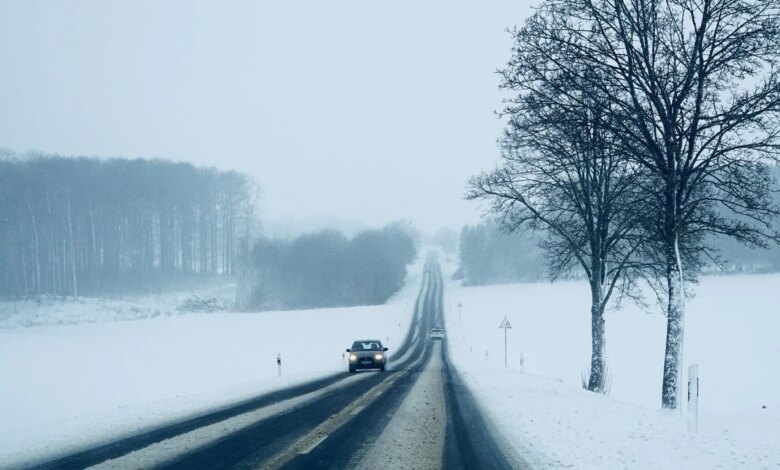
Spain has been hit by the powerful snowstorm Ingrid, which in just a few hours turned familiar routes into dangerous traps. Hundreds of kilometers of roads are now buried under thick layers of snow and ice, leaving drivers facing a real ordeal. The national meteorological service has issued a red alert, and road authorities have been forced to close dozens of key highways. The situation is evolving rapidly, and the forecasts are bleak: the storm shows no sign of letting up in the coming days.
Authorities are urging residents to avoid travel unless absolutely necessary. Conditions are especially challenging in the northwest, where snowdrifts and freezing rain have made movement nearly impossible. In some areas, trucks are stranded along the roadside or in designated waiting zones, while passenger cars are only permitted to drive if equipped with snow chains.
Road conditions
According to the latest reports, more than sixty roads across Spain have been affected by the storm. In the provinces of León, Lugo, Pontevedra, Zamora, Ourense, and Asturias, traffic is restricted or completely banned on key stretches. On the A-6 highway between Brazuelo and Pedrafita do Cebreiro, snow chains are mandatory, while on the A-52 between Requejo and A Canda, entry is completely prohibited for trucks.
A state of heightened alert has been declared in Andalusia due to flood threats, while storm warnings have been issued in the provinces of Jaén and Granada because of snow and strong winds. Storms are raging along the coasts of Almería, Granada, and Cádiz, and local authorities are advising people to avoid traveling along the shoreline.
Geography of the disaster
The list of affected regions continues to grow. In Asturias, Cantabria, Burgos, Salamanca, León, Ourense, Lleida, and other provinces, traffic is hindered or impossible in dozens of areas. In certain places, such as the Peñanegra Pass (Puerto de Peñanegra) in Ávila and mountain roads in Sierra Nevada, routes are completely closed. Drivers have to wait for weather improvements in designated areas, while road crews work around the clock to clear the roads.
Safety is a top priority: on many roads, the use of chains is mandatory, and in some sections only passenger cars are allowed through. Motorists are warned about the risk of ice and sudden snowdrifts, which can appear in a matter of minutes.
Restrictions and recommendations
The traffic police and emergency services strongly advise against traveling unless absolutely necessary. If a trip is unavoidable, it is recommended to check the road conditions in advance and prepare your vehicle for extreme weather. In certain provinces, such as Almería, Granada, Huesca, Asturias, Cantabria, Burgos, Salamanca, León, Ourense, and Lleida, travel is only permitted with snow chains on the wheels.
Among the roads that are completely closed are the routes in Almería (AL-5405), Granada (A-395, A-4025), Asturias (LN-8), Salamanca (DSA-191), Cáceres (CC-224), and Navarra (NA-2011, NA-2012). Drivers caught on the road are advised to remain in their vehicles, stay calm, and wait for assistance if movement is impossible.
Consequences and forecasts
Hundreds of trucks are stranded on the roadside and in designated waiting areas, while road services continue to battle the severe weather. In the coming days, challenging conditions are expected to persist: snowfall, freezing rain, and strong winds will hamper the work of municipal services and create new obstacles for transport.
Authorities warn that the situation may worsen and the number of closed roads could increase. Residents are advised to monitor updates and avoid taking risks unless absolutely necessary. In case of emergency, contact rescue services and do not attempt to cross dangerous sections on your own.
The State Meteorological Agency of Spain (Aemet) is the main body responsible for weather forecasts and warnings about climate-related emergencies. Aemet coordinates the actions of road and rescue services in such situations, ensuring that the public receives timely information about risks and necessary precautions.