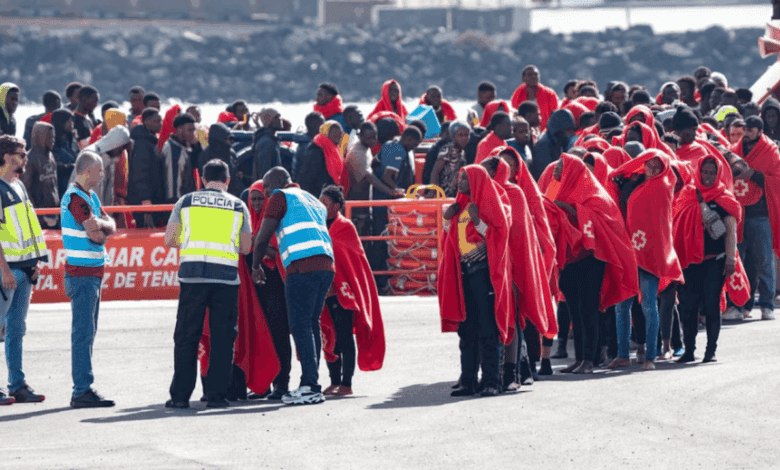
The Spanish government has approved 100 million euros to support unaccompanied minor migrants arriving in the Canary Islands. Currently, there are more than 4,500 such children and teenagers in the archipelago. The funds will come from the budget of the Ministry of Youth and Children and are intended to improve the reception, care, integration, and support system for minors.
In recent years, the Canary Islands have faced a surge in migrants, severely straining local accommodation centers. Although there has been a slight decrease in arrivals this year, the infrastructure remains overwhelmed. The children need not only housing and food, but also medical care, psychological support, education and legal services, as well as integration and independent living programs.
Oversight and accountability
Authorities emphasize that the use of allocated funds will be subject to strict oversight. The Canary Islands must comply with verification procedures set by the ministry, as well as the requirements of other government bodies, including the General Auditing Office and the Court of Auditors. According to Minister Sira Rego, funding has increased by 140% compared to last year and is nearly 40 times higher than in 2021. These resources cover about 90% of all expenses related to the maintenance of minor migrants on the islands this year.
Official institutions in the Canary Islands have long been operating at full capacity. The number of minors in care is three times the designed capacity of local centers. As a result, a state of emergency for migration was declared, providing for the relocation of children and adolescents to other regions of the country.
Regional resistance
In August of last year, the government approved a special decree setting quotas for the admission of underage migrants in each autonomous community. However, many regions have been slow to comply and continue to challenge the measures in court. Among the most vocal opponents are Madrid and Castilla-La Mancha, which have filed lawsuits citing political differences and administrative difficulties.
Plans called for about 4,000 minors to be transferred from the Canary Islands to mainland Spain. However, the process has been extremely slow and faces numerous legal obstacles. So far, only a portion of the children have managed to leave the archipelago, while most remain in overcrowded centers.
Asylum and integration issues
A separate issue arose with minors who applied for asylum under international agreements. These are children who have experienced severe hardship or come from conflict-affected countries. Special centers have been set up on the mainland for them, and several hundred have already been relocated there. This became possible after a Supreme Court ruling required authorities to provide protection for the most vulnerable groups of migrants.
The implementation of the court’s decision was marked by haste and administrative difficulties. The Canary Islands authorities faced a shortage of resources and time, and the deadlines set by the court had already expired in November of last year. As a result, some minors were transferred to the mainland in an expedited manner, raising concerns among child welfare specialists.
Life on the islands
Many of the minor migrants who remained in the Canary Islands spend their days on the streets and in parks, as well as at the entrances of temporary and permanent accommodation centers. Some have already adapted to life on the archipelago and do not want to leave, while others, on the contrary, express a desire to move to the mainland. Families that children have managed to connect with are trying to bring them back to their cities, but this is not always possible.
The situation becomes especially difficult when teenagers reach adulthood. If by that time they have not found a job or continued their education, state guardianship ends and their situation worsens dramatically. Many are left without support or prospects, which raises concerns among experts and human rights advocates.
Lack of support
Authorities in the Canary Islands have repeatedly stated that there is a lack of real assistance from other regions. Despite numerous promises and words of support, in practice the islands are left alone to deal with the problem. Those responsible for working with minors note that without solidarity and participation from all autonomous communities, the issue cannot be resolved.
For now, most of the burden falls on local authorities and staff in accommodation centers. They continue to work under constant stress and resource shortages, trying to provide at least minimal living and developmental conditions for children and teenagers.