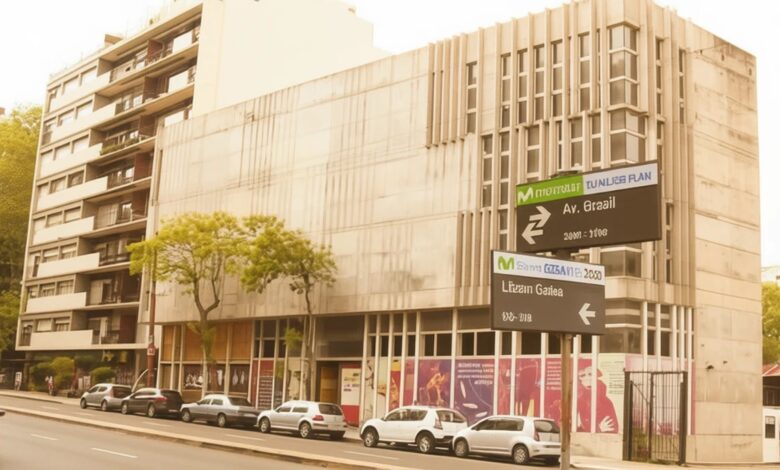
An unfinished cultural center in the heart of Montevideo has become a vivid example of how major foreign investments can turn into long-term problems for both parties. Spain invested over three million dollars in the “Espacio Cultural Federico García Lorca,” but ten years after construction stopped, the building remains unopened. Local residents walk past the concrete shell every day, a reminder of unfulfilled expectations and missed opportunities for the city’s cultural life.
As noted by elcierredigital.com, the project began with ambitious goals: to create a modern venue for theater, music, and exhibitions, intended to attract artists and audiences not only from Uruguay, but also from abroad. In the early 2010s, construction proceeded without delays, and funding from Spain was seen as a guarantee of success. However, by 2015 the situation changed dramatically—financial flows stopped, and work was halted with about a million dollars still needed to complete the project.
Funding problems
The reasons for freezing the project turned out to be multifaceted. Spain, facing internal economic challenges, scaled back its support without seeing the project through. The remaining portion of the budget was never covered by either local authorities or private investors. According to elcierredigital.com, the state of Uruguay made only one-time contributions, which were clearly insufficient to complete construction. As a result, the building was left in limbo, and its future has become a topic of debate between officials and the public.
The situation is further complicated by a legal restriction: the land under the center can only be used for cultural purposes. This rules out the possibility of repurposing the building for commercial or residential use, which could have helped offset the costs. As a result, the unfinished center has become not only a financial but also an urban planning deadlock for Pocitos—one of the most expensive neighborhoods in Montevideo.
Missed opportunities
Over the years of inactivity, the building has gradually deteriorated. The lack of finishing work and basic maintenance has made it seem like an urban scar in a prestigious district. Local residents have expressed their dissatisfaction, while the authorities have not been able to offer a viable solution. Attempts to partially open individual spaces in the center have failed: without full completion, the project cannot serve its intended function.
According to russpain.com, such cases are common for international cultural initiatives, where initially ambitious plans are hindered by funding shortages and bureaucratic delays. In the case of Espacio Cultural Federico García Lorca, the key issue was its dependence on external funding and the lack of a clear contingency plan in case that funding ceased.
Administrative errors
Management errors also emerged during the project. The documentation prepared by the Uruguayan side contained inaccuracies, making it harder to find new funding sources. Additionally, the absence of a single person responsible for completing the work meant that neither side took the initiative to save the center. As a result, the facility has remained in a state of indefinite suspension, and its future is uncertain.
In recent years, phased opening of the building has been discussed, but without additional investment, these plans appear unrealistic. Authorities and community organizations keep looking for a solution, yet enthusiasm continues to fade amid the prolonged crisis.
The story of Espacio Cultural Federico García Lorca recalls other unsuccessful cultural projects, where large-scale investments failed to deliver the expected results. For example, in the early 2020s, there were already instances in Latin America where foreign investments in cultural infrastructure were frozen due to changing political priorities or economic difficulties. Such examples highlight the importance of careful planning and diversification of funding sources for initiatives like these.