December in Spain kicks off with a real weather shake-up. From the very first days of the month, the country will experience a sharp drop in temperatures along with a series of storms bringing heavy rain and snowfall. Nighttime temperatures will fall below zero, and in some cities thermometers may dip to as low as -4°C. The changes will be felt most acutely in Galicia, Cantabria, and the northern regions.
Monday will start off relatively calm, but by evening, thick cloud cover will move over the west of the country. Galicia will see prolonged rainfall gradually spreading inland, reaching northwest Castilla y León and Asturias. Meanwhile, brief downpours are possible along the Mediterranean coast, especially overnight, in areas between Cabo de la Nao and the Strait of Gibraltar, as well as on the Balearic Islands and in Melilla.
Cold snap and snow
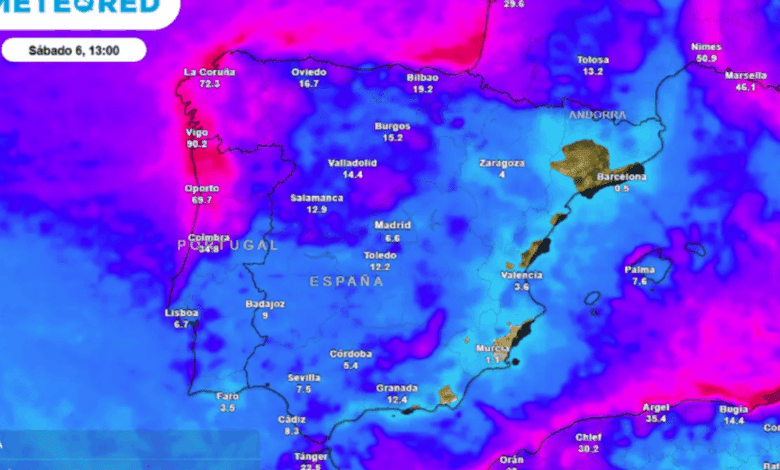
During the first half of the week, nighttime frosts will persist in the central and northern regions. Cities such as Teruel, Cuenca, Ávila, Soria, Vitoria, León, and Burgos will feel especially cold in the mornings. Atlantic fronts moving in succession will bring rain to almost all of Spain. The heaviest precipitation is expected in Galicia and the north, where up to 100 liters of water per square meter could fall by week’s end.
Snowfalls in the northern mountains and the Pyrenees promise to delight winter sports enthusiasts. In some areas, the snow cover will reach 30–40 centimeters, and in the Cantabrian Mountains — up to 20–30 centimeters. Other mountain ranges will also see snow, but in smaller amounts.
Rain and showers
On Tuesday and Wednesday, rain will sweep across most of the country. In Galicia, País Vasco, Castilla y León, Extremadura, the western areas of Andalucía, Madrid, and the Pyrenees, more than 10 liters of precipitation per square meter is expected. Meanwhile, Mediterranean regions will remain relatively dry — the fronts lose strength as they move through mountain ranges.
By the end of the week, total rainfall in western areas of Galicia, especially in the provinces of A Coruña and Pontevedra, as well as in the southwest of Ourense, could exceed 100 liters per square meter. In the rest of Galicia, northern León, Asturias, Cantabria, País Vasco, and the mountainous areas of central Spain, rainfall will range from 50 to 100 liters.
Weather contrasts
Despite nighttime frost, daytime temperatures in some Mediterranean cities may rise above 20°C thanks to warm westerly winds. This contrast is especially noticeable against the cold nights in central and northern regions.
As the weekend approaches and Spain prepares for an extended holiday break, meteorologists are forecasting possible warmer temperatures. Atlantic air is expected to bring milder weather, which could cause some of the newly fallen mountain snow to melt. However, weather scenarios remain uncertain, and the situation could change at any moment.