Spain’s unexpected exclusion from a closed meeting of European leaders could impact the country’s standing within the EU. Decisions made at such summits often shape the entire bloc’s strategy, and Madrid’s absence among the invitees raises questions about Spain’s future influence on key processes in Europe. For Spaniards, this is more than just a diplomatic incident—it signals possible shifts in the balance of power across the continent.
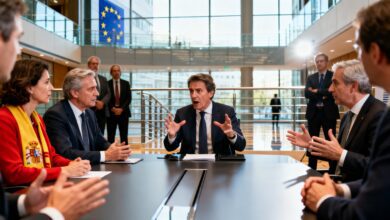
The meeting, organized by Italy, Germany, and Belgium, brought together 19 countries, but Spain was the only major nation left without an invitation. The event’s format was exclusive and politically charged; leaders discussed the single market, industrial policy, and how to respond to challenges from the US and China. The Spanish government voiced frustration, not so much over their exclusion itself, but over the fact that such meetings undermine EU unity and revive the idea of a multi-speed Europe.
Madrid points out it did not request to join this format, but believes that such initiatives harm the spirit of European solidarity. Spanish authorities worry these interest-based clubs could become the new norm, where key decisions are made without the involvement of all members. The concern is all the greater given that, until recently, Spain was among the countries shaping the EU’s economic and defense policy.
A change in format
The contrast with recent events is striking: at the beginning of the year, Germany proposed the creation of a group of six leading European economies, including Spain. This format, unofficially dubbed the E6, aimed at expediting progress on competitiveness and defense. At the time, Madrid saw its participation as recognition of the country’s importance in European politics. However, the new meeting in Belgium, where Spain was left out, signals a shift in priorities and a possible redistribution of roles.
The current meeting was organized by German Chancellor Friedrich Merz, Italian Prime Minister Giorgia Meloni, and Belgian Prime Minister Bart De Wever, who opted for a select group of participants. This allowed them to align their positions ahead of the official summit attended by all 27 countries. Despite being present at the formal session, Spain was excluded from the informal negotiations, potentially weakening its influence over the final decisions.
Madrid’s reaction
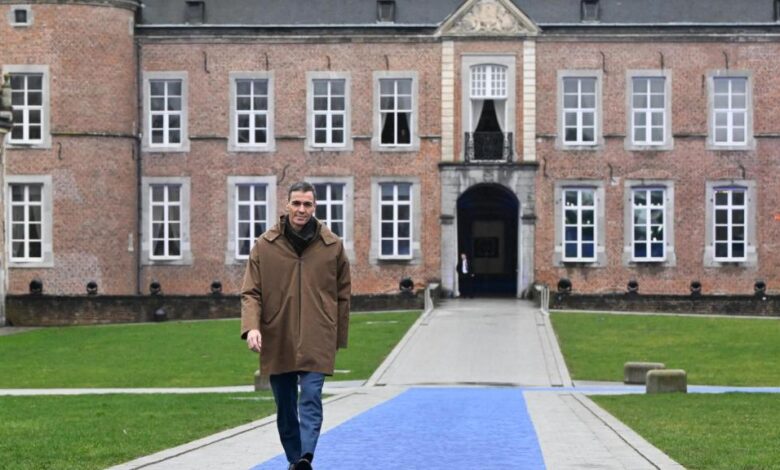
The Spanish government is trying not to escalate the situation publicly, emphasizing the importance of the main summit where key reforms to the single market are discussed. However, behind the scenes, there is frustration: Madrid does not want closed-door meetings to become the norm, as this threatens to marginalize the country in matters that directly affect its interests.
There is particular concern over the fact that the initiative comes from countries with which Spain recently coordinated actions within the E6 framework. Now, however, Meloni and Merz are creating a new center of influence where Spain does not play a prominent role. This could result in Spain being among those countries that participate in discussions only formally, without affecting real decisions.
Consequences for the EU
Outwardly, Spanish authorities emphasize that the legitimacy of decisions is ensured only at the level of the European Council and official meetings. However, the political struggle for leadership on competitiveness and economic policy is increasingly shifting behind closed doors, where not all countries have equal access to decision-making. For Spain, this raises the risk of ending up in the ‘slow lane’ of Europe, where key initiatives are shaped without its involvement.
Diplomatic circles note that Spain previously supported the idea of multi-speed integration when it was beneficial. Now, the country is facing the downside of such a policy: decisions are made within a narrow circle, leaving Madrid only to express its opinion through official channels. This highlights the delicate balance between openness and efficiency in the workings of the European Union.
In recent years, similar situations have already occurred in European politics. For example, France and Germany have repeatedly held separate consultations on defense and economic issues, inviting only selected partners to the dialogue. In 2024, a comparable scandal flared up around an energy policy meeting, when Spain was also excluded from key discussions. Such episodes are becoming increasingly frequent, indicating a trend toward the formation of informal alliances within the EU. This is changing the rules of the game and compels countries left outside these groups to seek new strategies to protect their interests.